EMPIRE OF MEDIA ILLUSION
The Media is the most powerful entity on Earth; they have the power to make the innocent guilty and to make the guilty innocent, and that power. Because they control the minds of the masses. — Malcolm X

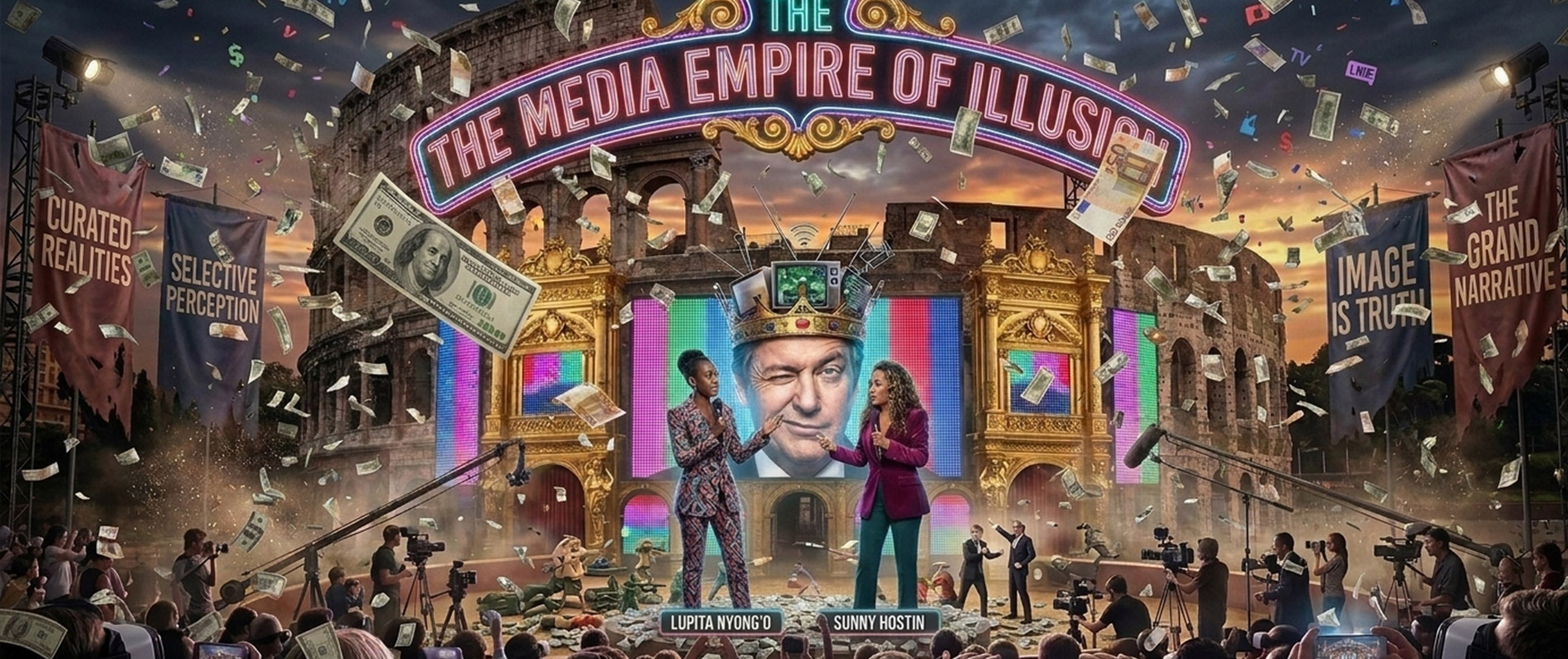
Hollywood is a system; media is a system; news is not news; it is more aligned with a performance, with all kinds of commercial and political concerns intertwined. It is a real-life room of magicians, or the WWF planning a match-up between the Good guy and the bad guy. As consumers of media, we must, at this stage in media’s long history, be conscious of how the system works. In this deep dive, we will draw on the work of Crisis Hedges and Alik Shahadah to deconstruct the matrix of media and reveal to the dwellers of the cave a new reality beyond the shadows on the wall.

Most of us are familiar with Malcolm X’s quote, but if we understand it, why do we play the game after posting it to our status? Why the cognitive dissonance? Why the performance? Which one is real? Malcolm X or Lupita’s worldview? Substance or performance of substance. The horrible truth is that it is a blind spot in human psychology: how our brains process Malcolm X’s wisdom and how we read the words do not naturally merge to create a new behavior. They are stored in separate parts of our brain, hence why so many people are contradictory. True alignment with Malcolm X requires sacrificing comfort and challenging the status quo. When pushed, most people choose personal comfort over systemic disruption. Malcolm X’s philosophy in daily life is incredibly difficult because it demands radical self-honesty, constant discomfort, and a willingness to reject mainstream societal structures. So people will quote him on Israel, but fail to see the extension when they drop their political hat and become consumers of Hollywood trash.
A HARD MISSION: REPROGRAMMING
It gets exhausting writing short content to cover complex topics. If writing deep causes alienation, then it only proves our work belongs somewhere else to another audience. It is painful to go through “black” YouTube, Patreon, Facebook, Medium, and see where most of our people are at. From icons like Richard B Moore, Du Bois, and Elijah Muhammad to the most superficial representations is saddening. Muslims, as a group, went through this also, but you can look at how they are walking out of it to become politically sophisticated and recapture Islamic philosophy— where are we located in our conscious journey?
One of the hardest things on Earth is to give people new knowledge, especially when it goes against how they are engineered to think. So much mythology is used to build everything we know about the world; surrendering it creates a kind of nihilism. Nia means purpose, and purpose within African philosophy includes hermeneutics (understanding the text/speech) and axiology, the value of something, i.e., what is its utility. This one tool breaks through all the BS in one click. And we need to start a dissection of reality with the correct tools, just like a neurosurgeon uses specific tools for brain surgery rather than someone doing an autopsy. And the best thing about critical studies is that it is so transparent you can make your own mind; it is a dialectic discussion with full disclosure, meaning presenting all elements of reality to discover a truth.
REPURPOSING REVOLUTION TO PROTECT CAPITALISM

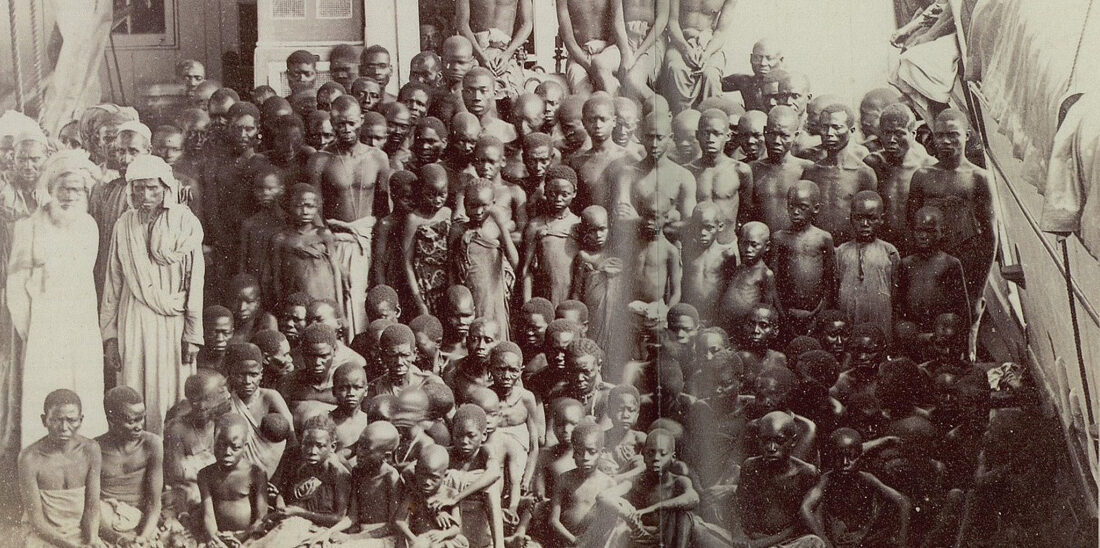
This was what racism looked like 60 years ago
I read a post that said:
“Anyone who takes issue with this film (Odyssey) has now been exposed as a racist”.*
Strange criteria, but it does not end there, because this is accepted as the highest expression of agreed-upon racism not to mention the fact that authentic African studios have vanished in the last decade. Racist, according to Malcolm and all our ancestors before him, was a black body hanging from a white oak. Racism is captured in the lyrics of Nina Simone’s ” Strange Fruit, or the pain of Omar Ibn Said. Today, the bar on racism is defined by not finding a Sub-Saharan African woman from Kenya as beautiful as Margot Robbie or Vanessa Williams. Revolution is “challenging Eurocentric beauty standards,” yet only doing so within the heart of European culture: Why not challenge Eurocentrism with African mythology? Of the 1000 of comments discussing these topics, how come you never read that one before? Because of the hermeneutic injustice the media machine perpetuates in our minds. We live in someone else’s matrix where even our “revolution” reinforces capitalism and European culture.

Challenge Eurocentric beauty with African Mythology
SPEAKING A FOREIGN LANGUAGE
Terms like “historical accuracy,” “forced diversity,” “media literacy,” and “cultural erasure” are thrown around as weapons rather than used as tools for actual critique from which they were derived. It is like how everything is “existential” or “brain rot.” A person selling you brain rot is warning you about brain rot. A person demonstrating cognitive dissonance is warning you that someone else is doing it. A channel all about selective outrage is being selectively outraged. Critical thinking in a conversation is sprinkles on a cake.

Get your word salad right to look relevant
The online debate over The Odyssey has degenerated into an automated exchange of hollow shibboleths, where neither camp truly understands the nuance of the terms they weaponize; instead, they simply deploy pre-packaged slogans they heard on Critical Drinker or in Woke Hollywood as a social reflex to signal their tribal identity. Because honestly, what does the common man know about aesthetic real or mythological? Who studied African mythology or Ethiopian aesthetics? Let alone Greek 2000 years ago? Sunny from the view knows Greek sensibilities? Most people do not and cannot form these opinions independently; they wait for a dominant cultural commentator like The Critical Drinker to hand them their script, which they then repeat to look informed and authentic to their peers. The sudden, overnight weaponization of the word “immersion.” Just like “media literacy” or “pacing” before it, “immersion” has become the latest buzzword that everyone online suddenly claims to be an expert on, using it as an objective-sounding shield to hide what is actually just a personal or political preference.

Ethiopian art has an aesthetic and lives in an Ethiopic world, not a Norwegian one
I randomly challenged one of these black channels to explain Ethiopian beauty standards or Ancient Egyptian beauty standards and render a verdict on their alignment or non-alignment with so-called Eurocentric beauty standards. They did not realize these things overlap more than they fight each other. It’s all shallow; it is all performance; it lacks depth; it has no legacy and no repository of true knowledge. This is why you can watch 100 videos and hear only two tribal narratives on any given topic. It is like no other knowledge exists: Lupita is the most beautiful woman on Earth vs Lupita, the face that caused 1000 ticket seats to be empty.
DIGITAL TRIBES
The divide operates like a rigid script, where one side’s cultural rallying cry triggers an immediate, rehearsed counter-signal from the other:
- When Camp A shouts “Forced diversity!” to condemn modern casting, Camp B mindlessly counters with “It’s just mythology!”—both completely ignoring the complex realities of Bronze Age Mediterranean trade routes and historical demographic fluidity.
- When Camp A complains about “modern language in the classics!” over the script’s colloquialisms, Camp B snaps back with “Historical re-contextualization!”—neither group actually understanding how oral poetry and classic epics have evolved linguistically across centuries of translation.
- When Camp A reviews the film as “Anti-woke resistance against corporate Hollywood slop!”, Camp B dismisses all structural critique as “Bad-faith review bombing!” or “racist coming out of the woodwork”—flattening genuine cinematic discussion into a binary loyalty test. If you do not agree with me, then you are a RACIST!*
Ultimately, these slogans are not meant to foster debate—if we still remember what that is. They are merely tribal badges worn by people who would rather belong to a digital crowd than engage in critical thought. And ultimately, if not ironically, they funnel into the Hollywood matrix.

It is like a wrestling match: Never who was right, only who WON: Candace won LOL
AUTHENTIC SOMETIMES
If a major Hollywood studio took a 17th-century Kenyan oral epic—such as the legends of Luanda Magere or the rich mythology of the Mijikenda peoples—and cast white or non-African actors under the excuse that “it’s just mythology,” Lupita Nyong’o would almost certainly be deeply offended and object to it. I am not isolating Lupita, but she has made quite a name for herself in modern cinema politics, and she remains a perfect example of everything under discussion. Viola Davis is just doing great films and living a more private life— not Lupita.

The historical reality exposed a flaw in woke culture
When Nyong’o famously exited production on The Woman King (2022), she did so explicitly because she felt the film’s script was taking too many creative liberties with the historical and cultural accuracy of West African history. She is not a historian and was upset by the conflict between women’s empowerment and how it intersected with slavery within those same realities— but it did, you see there was no “woman’s empowerment” it was pure survival, they were not making modern feminist statements— to suggest that was how any female domination in West African polities evolved, you would have to be off your rocker.
When a figure like Lupita Nyong’o speaks on representation, the corporate machine is commodifying morality. They are taking deep, complex, and real human concerns—like cultural identity and historical erasure—and turning them into a trendy, glossy corporate product designed to shield a $250 million investment. Lupita has built a massive part of her career on the concept that marginalized cultures must be aggressively protected from being genericized- well, until we are discussing Greek culture and the feelings of Greek people. Double standards are more acceptable when the motivation is aligned with capitalist interest. She is only inconsistent if you failed to diagnose what she really is— another calculated cog in a capitalist matrix serving the machinery.
RAGE BAIT SELLS: DOWNSTREAM REVENUE
The Matrix does not trade in accuracy; it trades in adrenaline

The Math of “Rage-Marketing”: Traditional movie trailers cost millions to distribute. However, casting a Black actress as Helen of Troy or a transgender actor like Elliot Page as a Greek soldier creates a predictable algorithmic firestorm. It generates hundreds of millions of dollars in free, organic advertising driven by social media arguments, news cycles, and political commentary. Studios calculate this engagement down to the penny. And everyone downstream of the studios profits: The Critical Drinker, CNN, Blackout TV, Instagram, Facebook, The View, Amazon, Google ads. Let us just isolate The Critical Drinker, who is just one honest white guy who loves cinema. From one video like “The Odyssey- A disastrous Triumph,” he made $6000 from ad revenue alone. Hitting 1.5 million views generated another $6000, Now think of all the sub-videos he makes from this one film, from its initial coming soon until its pre-release, to its final trailer, to the actual release, to its box office revenue, to its distribution deals. What about promoting VPN? How much does he earn from that? He is looking at $55,000 per month. All from one film; think of the ecosystem and all the wealth it generates. Would a critical drinker of any of these downstream economies wish he had made a less controversial film?
I am trying to make a clear-cut case that a film not only generates revenue for Lupita, Nolan, and the studios, but it also funds a complex economic web. Lupita is not only making money from the film, but she is also raising her value every single time she is shown on screen. The face that launched 1 million dollars in revenue for every brand she sponsors, every magazine, and every interview she gives. She knows one day will come when her name will be on page 1000 of Google, but that day is not today. And we will get into the ethics of Hollywood culture and its axiology.
The “Bait-and-Switch” Screen Time:
Lupita Nyong’o barely being in the movie is the ultimate proof. If Universal truly cast her just because she was the “best fit for Nolan’s artistic vision,” she wouldn’t have been positioned as a main character on the poster and front-and-center on the red carpets. They intentionally over-marketed her brief role as Helen of Troy precisely to trigger the “DEI” culture war debate and keep the movie trending.

Casting was not done to challenge Eurocentrism, but to confirm it
The Universal Playbook: This is not a conspiracy theory; it is a standard corporate defense mechanism. If a studio is dropping $250 million on a high-risk Bronze Age fantasy epic, they need an insurance policy. By manufacturing a casting controversy, they build a built-in protective shield. It forces the entire conversation to be about race and ideology, which effectively drowns out any objective criticism regarding the movie’s actual script flaws, editing, or 173-minute runtime.
The Anatomy of the Mars Hype Machine

There was never any Mars plan for this lifetime
When the media and Elon Musk began heavily pushing the timeline of colonizing Mars, it created a massive, lucrative industry out of pure speculation. The expert economy suddenly: cable news networks, universities, and magazines needed “Mars experts.” Astrobiologists, architectural consultants for space habitats, and psychological advisors were hired for panels and articles. Millions of dollars in book deals, speaker fees, and university research grants were handed out to people specializing in a reality that was decades—if not centuries—away from actually happening. They milked Mars until reality finally intervened and crashed the cash cow. Few of these mainstream articles or TV segments focused on the immediate, glaring dealbreakers—such as the fact that cosmic radiation would cook human DNA during the transit, or that the soil on Mars is highly toxic perchlorate. To bring up these foundational realities would instantly kill the narrative. Media executives did not stumble into this; they all played textbook media games with their collective self-interest, creating identical outcomes. Keep people talking about Mars, and we will keep collecting.
The Ultimate Goal Was Attention and Funding: What was the goal of the Mars hype wasn’t to actually land people on Mars by 2024 or 2026. The goal was to keep SpaceX’s valuation soaring, secure massive government contracts, and generate infinite clicks for media sites that feed on futuristic tech optimism.
RETURNING TO CHRIS HEDGE

THedges states that as real-world conditions worsen (economic decline, endless wars, and erosion of rights), Hollywood ramps up mass fantasy. The worse reality becomes, the more a beleaguered population craves the comfort of trivia, celebrity gossip, and spectacular pseudo-events to numb themselves. As Neil Postman states, we are entertaining ourselves to death, a position echoed by John Gray in his epic work Straw Dogs, where he says that entertaining people is becoming the largest industry in developed nations.
- The “Cult of the Self”: He argues that celebrity culture plunges society into a moral void where people have no intrinsic value beyond their appearance or usefulness in relation to capitalist consumption. Individuals are conditioned to view themselves as marketable commodities, obsessed with self-absorption rather than the common good. Influencers sell people a lifestyle they cannot access, but they believe that by loving these celebrities, they are also participants in the successful lives of others.
- A Tool to Prevent Resistance: The entertainment industry deliberately drains people emotionally and confuses their sense of identity. By conditioning audiences to chase illusions of impossible fame, wealth, and consumer happiness, it actively keeps them from fighting back against the corporate state.
- Success is virtual signaling: To navigate the world, per mass media, you have to signal to the right causes to align your values with those which are trending. May it be dropping shibboleths like “Black Lives Matter”, or “Trans rights are human rights”, etc.
- Psychopathic Core Values: Hedges asserts that Hollywood elevates narcissism, lying, and manipulation—the core ethics of raw corporate capitalism—and holds them up as the highest virtues.
The ultimate victory of the celebrity matrix isn’t that it fools us; it is that we all willingly play along with the mass delusion that a highly curated, corporate-backed celebrity possesses genuine moral authority.
TAKE DOWN THAT F SIGN
Calling reality by its true name in the Empire of Illusion means breaking your contract with the game and stopping digesting illusions for truth. Calling capitalization of consciousness for what it is. Calling the shadows on the wall of Plato’s cave shadows. It means looking at a celebrity press junket and refusing to grant it any moral or intellectual weight whatsoever. Malcolm X was ahead of our time in this regard when he vocally exposed why you would speak to a horn player on issues regarding race and justice.
Stripping away the Illusion and taking down the sign and calling reality by its true name means rejecting the sanitized, idealistic corporate explanations: The Studio’s “Sign”: “We chose this cast to create a beautiful, representative, universal portrait of human myth that speaks to the modern world. “The True name: “We mixed a highly recognizable, multi-ethnic cast of global icons to secure international financing, maximize algorithmic engagement through controversy, and shield a $250 million film behind identity politics so it wouldn’t be judged solely on its creative merits.”
The Manufactured “Moral Leader”
In a hollowed-out corporate culture, traditional pillars of real authority—scholars, investigative journalists, community leaders, and genuine ethicists—are pushed to the margins because they are nuanced, challenging, and unprofitable. In their place, the media elevates the celebrity as the ultimate moral arbiter. A multi-millionaire actor, dressed in haute couture on a red carpet, is given a microphone to make sweeping, authoritative pronouncements on history, race, justice, and humanity. Morgan Freeman is the new authority on African American history, 50 Cents is a critique of Zohran’s economic reforms, Sonny from the View, yeah, her, is an expert on Blacks in Ancient Greece, and are on an equal platform as scholars. What Lupita, an actress, thinks about the aesthetic of mythology is as valid as 20 scholars with 200 years of collective experience. But this is the way (Mandalorian), it is impossible for us to get anyone to read about Ancient Egypt or anything deep, because they can apparently get everything they need to know for some idiot in a car in a 45-second short. No wonder Helen is Black and Captain Ibrahim can stop bullets with his teeth.
The same Denzel who played Malcolm X acted in the Islamophobic film The Siege. The same Beyoncé who said “Beauty Hurts” has millions tied up with the beauty industry and wears a blonde wig. I do believe when Rihanna said “Free Palestine,” she was being honest, and she was shocked that, despite all her millions, that was the wrong thing to say at that time.
The Transgression of the Audience
The most cynical part of the “game” is that, deep down, some of the audience knows it is a performance. We know the celebrity is a manufactured corporate brand managed by a team of PR handlers, publicists, and legal teams. Yet, as Hedges points out, society collectively agrees to pretend the illusion is real because it is emotionally satisfying. After all, what else do we have to distract us from rising food costs and abject hopelessness for our children’s future?
* We want to believe the celebrity is a pure, courageous hero fighting for our specific values.
* By attaching our personal identity to their curated statements, we get to feel a cheap, easy sense of moral righteousness without ever having to do the hard work of actual civic engagement.
How the Corporate Shibboleth Works

Repeat the line and get the pass
As discussed in our article on the Ultimate Evil, when an actor or a studio deploys terms like “representation,” “global universalism,” or “artistic license,” they are not engaging in a sincere philosophical debate. They are repeating the corporate passwords required to maintain their elite status:
* The Protection Mechanism: Uttering the correct, fashionable buzzwords acts as a shield. It signals to the major studios, the streaming algorithms, and the elite media institutions that the celebrity is a safe, compliant investment who will not disrupt the status quo. Why do you think so many people opposed to the genocide in Hollywood remain so silent, yet let a war break out in Congo, and all of them are crying for Congo? Because Congo is safe, Ukraine is safe, children with flies on their faces are safe, and it gives them moral clout.
* The Currency of Admission: Just like the ancient biblical story where mispronouncing the word “shibboleth” got a person executed, failing to repeat the current cultural script in Hollywood can get a celebrity financially blacklisted or deemed “unmarketable.”
* The Fluidity of the Script: Because these words are just passwords rather than actual truths, they can be flipped instantly whenever the financial landscape changes. This is why a celebrity can passionately demand strict cultural gatekeeping for one project and dismiss it entirely for another. The shibboleth changes depending on which cause has the biggest check.
The Ultimate Realization
You see that the entire “culture war” manufactured around films like The Odyssey is just a beautifully choreographed wrestling match. And the pattern there is the same with Elon and his Mars mission. The actors on the stage are simply reciting the code words necessary to remain in good standing with multi-billion-dollar conglomerates. Success is your manners and how you sit with the establishment. This is no secret; everyone who has ever been in the film and music business knows they only bank on people/products that can play ball. Politics is all about how well someone is capable of playing ball, and the language (shibboleths) is the silent code for this wink-wink world to work. Who is going to push Black Kenyan Lupita as an investment tied to magazines, makeup deals, when they’re not sure if she will go and say “Free Palestine” or support Independent conscious cinema? We know this not from strict academic research; we know this from being in this same industry, being at meetings, watching people from within our ranks get dropped and, in some cases, accelerated to success because of their willingness to trade conscious values for capitalist values. I have sat in conversations with top-billing African Americans, and everyone knows how this game is played. It is the biggest open secret that the public refuses to understand because they also have a massive psychological investment in keeping up the signs.
Once you know the passwords they are using, the performance completely loses its magic. You no longer see a high-minded debate about art and humanity; you just see corporate assets protecting their capital.
IDENTITY AS A WEAPON
“To prove blacks are equal to whites, we will cast them in roles once reserved for whites — and count it progress the moment they stop looking for themselves in their own cultural spaces.”— White Supremacy dressed up as liberation
This section will focus on the work of Alik Shahadah, Tolerable Dissent, African Aesthetic, and The Heavy Flag of Pan-African cinema, as well as others on the film industry.
Identity as a Utility: In the architecture of a $250 million blockbuster, the studio does not view a Black woman through the lens of genuine historical or cultural validation. They view her as a high-value commodity. Her casting serves a mechanical purpose: it ignites the algorithms, drives free marketing via pre-release rage, and provides a progressive shield for a project that otherwise entirely excludes native Mediterranean talent. On paper, this system deserves 10/10.
* The Bait of “Glorification”: The marketing machine sells the illusion that this casting is a historic victory for Black beauty and representation. But as critics pointed out after seeing the actual film, her role as Helen of Troy is incredibly brief, underwritten, and relegated to a few flashback sequences. The studio did not invest in exploring a deep, complex African narrative in the ancient world; they simply used her face on the poster to trigger a highly profitable culture war.
* The Unequal Transaction: The ultimate irony of the “utility” argument is that it treats African identity with the same cynicism it treats Greek heritage. It hollows out the specific ethnic worldview of ancient Greece to create an abstract, globalized product, while simultaneously exploiting a Black actress as the frontline lightning rod to take the heat for the studio’s financial chess moves.
When an actress of Lupita Nyong’o’s immense caliber is restricted to less than five minutes of total screen time in a three-hour epic, it exposes the complete emptiness of the studio’s “inclusion” narrative. Her performance was not utilized to its full artistic potential; it was weaponized. If a filmmaker genuinely believes that a Black woman represents the ultimate standard of mythic beauty and wants to explore that, they write a movie centered around her. They give her the script, the screen time, and the character arc to prove it.
Removing her or replacing her would have next to no effect on the overall film; same for Sinon; there is no way to justify that casting choice if looking at it from a talent perspective.
Instead, the corporate machine:
- Put her face front-and-center on the poster.
- Sent her out to do the heavy lifting on the global press tour to defend the project.
- Left her to absorb all the toxic online backlash and culture-war vitriol. Where her beauty came under severe attack and drew attention to her features that never were an issue until now.
- 4. Handed her a tiny three-minute cameo once the actual movie started.
They didn’t capture her talent; they captured her identity. The studio didn’t hire an elite actress to give a great performance—they did not hire her to create a universal non-Eurocentric beauty standard—they hired a polarizing headline to sell tickets, leaving her actual talent completely left on the cutting room floor while they walked away with a billion dollars. And yes, she played the game for her own benefit.
Inverting Beauty, then Breaking It

Gaslighting people to create controversy
When an individual with a highly symmetrical face takes the “inverted filter” challenge, their appearance changes very little. This outcome acts as a validation mechanism, confirming that their face aligns perfectly with traditional, mathematically driven standards of beauty. Like a beautiful woman going without makeup as a challenge to the makeup industry, or Sunny from the view complaining about a bad hair day. Or coming to terms with her curls— are you serious? The inversion was not rebellion, but another way to confirm their beauty standard. Nolan is a very sophisticated man; make no mistake, if I explained this to him, I promise you he would smile.

I at least expected this
The ultimate corporate cynicism is what the film does with that inversion once you are inside the theater. The Reality on Screen: Nolan does not actually glorify or celebrate her beauty in the film. He takes this dark-skinned actress, puts her on screen for a mere three minutes, and immediately slashes her face with a jagged scar and forces her into a meek, broken, and physically abused state. What is the visual hermeneutic breakdown of this?
This exposes the complete lack of artistic or moral sincerity behind the project. If Nolan wanted to elevate a non-conventional standard of beauty, he wouldn’t have hidden her behind scars and a three-minute flashback cameo. She was chosen because her specific appearance was the highest-utility weapon available to start a culture war. The studio knew that casting a dark-skinned woman, with polarizing features, even by African beauty standards (South Africa, Somalia, Ethiopia, Nigeria, Rwanda, Tanzania, etc) would draw out the loudest, most volatile reactions from internet commentators. They used her distinct features as bait to dominate the global media landscape,

We got her uglified on purpose
If a director truly believes that a non-conventional, dark-skinned Black woman represents the peak of epic, divine beauty, they shoot her in a way that elevates and celebrates those features. They use lighting, framing, and narrative reverence to convince the audience of that beauty. And most do not know this unless you have a background in cinema, but lighting a dark-skinned actress next to light skin Jewish man can be done right, and it can be done wrong. The fact that she looks so “black” is because that was what they chose to do. The same way Vogue photographs African models from the Sudan and deliberately drops a few F-stops to make them blacker than they really are. In Photoshop or DaVinci, they color grade the hell out of it to make black skin even more shocking, especially against the “white norm”.

Her beauty is not urinated on
By casting Theron as Calypso—and leaving her pristine, ethereal, and conventionally beautiful—the film preserves the traditional, Eurocentric standard of desire and divinity. It does not deface Anne Hathaway; she is beautiful in every single scene. In effect, the director is telling the audience exactly what he thinks: he relies on the audience’s existing biases to create a jarring contrast, using her features as the metric to measure how far the classical ideal has fallen.
But when you take down the sign and look at the actual film, the reality is the exact opposite. They didn’t cast her to glorify her; they cast her to use her as a visual tool of disruption, relying on a hidden baseline that still considers her features to be the “diametric opposite” of standard beauty. “urinating on” a beauty standard you secretly believe in, the argument reaches a profound conclusion: the director’s intention wasn’t to expand beauty, but to perform a violent act of artistic vandalism and “black” beauty was the alter he defaced.
YOUR PARTICIPATION IS NECESSARY
No one expects human nature to change; no one expects the algorithm to change because of everything we discussed. It is motivated by money. The only thing that can change is that those who are conscious can change their engagement and create new alternative realities so people, once they find a path, actually have books, media, etc to build anew.