

Death of African Languages
Only 2% of books published in South Africa are in African languages, yet 80% of the population speaks a language other than English or Afrikaans— IOL
By African Holocaust society1 See English is Ours Now
One of the challenges with African languages is that with the arrival of both modernity and the colonial languages, the natural inventory system within the languages died. New words came from the colonial source, as opposed to the language’s ability to invent new words for this new, rapidly changing modern world. When was the last time an African language invented a new indigenous word as opposed to taking a word from English or French?
Yes, African Languages are important. But which language do you want me to say, “We don’t own anything and we don’t support each other economically,” that will make you take action? Should I put it in Zulu, Amharic, or Luanga, and then you will take action? Take a step back, we have a language problem is a leaf problem, it is not a ROOT problem. What do you need a Pan-African language for if we buy everything from Asia or Europe?

Ge’ez is the “Latin” of Ethiopia. Used to write languages like Amharic
Some are happy to complain that African languages are not represented, but how many buy books in their native African languages? Or even support books/films by African authors, period? How then can we expect the books in Swahili to fall out of the sky? Arabic, English, etc, are not only dominant because of conquest, but because of the personal investment those language speakers make in seeing those languages represented. They are institutionalized, they have scripts, and they are necessary in commerce and law. While Swahili, Amharic, and Hausa hold on to some power in terms of their necessity within their geo-political zone the same is not true for most other languages like Zulu, which are not essential for doing anything important in South Africa: You do not need it to open a bank account, buy a car or a house, go to Uni, run a business, become a billionaire, speak to SARS, or buy food at KFC. And you definitely do not need it to get a job, on the contrary the less of it you speak the more employable you are perceived to be. It holds no prestige within society, largely because it has not been integrated into the economic fabric of a society still controlled by first-language English speakers, followed by Afrikaans.
To undertake a language is to undertake a culture — Kimani Nehusi

 What economic benefits will replacing English with Shona or Zulu offer impoverished Africa? Has anyone asked this question? But how much would any such endeavor cost? It is not being presented here to stymie the need for our African languages but to be critical enough to understand 360 degrees around this issue— to keep it real so to speak. Zulu is taught in schools and this creates jobs for Zulu language teachers, but once these kids learn Zulu what is the economic benefit of that knowledge? It is almost like learning abstract art. So it has other intangible and cultural benefits but not many economic ones. No one is going to reprint “A Brief History of Time” into Ndebele anytime soon.
Language as a tool for articulating an African reality.
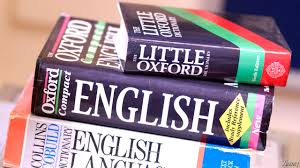
English dominance
While controversial, we need to discuss the effectiveness of an African language today to articulate our African reality vs a European colonial language. And the argument goes like this. IF no one is developing our African language, how would they be able to articulate a contemporary African worldview? It is not a sentimental debate. You see, some of us think that there is some divine inherent thing in an African language that makes it work with our African worldview. But how did that come about if not through using the language? It did not fall from the sky. Now, conversely, if we are not using our languages in 2019 to express contemporary issues (like agency, identity, evolution, development paradigms) how can we expect African languages to still have power over the languages we are using 24/7 to speak about our reality? We must recall the evolution of say English in discussing Pan-Africanism has a far greater investment than Zulu and Hausa or even Swahili and Amharic.
In conclusion, the effectiveness of any language depends on how it is used by those who use it. Makes no difference where it came from. And if we are serious about preserving the relevance of our languages, then we must speak them properly in all areas of people’s activity. How to do that is another serious challenge for which we have no solution.
WHY ENGLISH WINS
English no longer belongs to the English
We often forget that language is made by the humans who use it. It is not made by God (so to speak), which means it can change. English has changed drastically since we came across it in Africa as colonial subjects. A large part of that change has come about through some mild forms of African agency. You only need to look at hip hop alone and even jazz to see how English has been totally changed by us using it. The mere fact that I am expressing my African opinion in English changes it! Unfortunately, this is an investment in the expansion of English and the contraction of my Native African languages (assuming I have one).
In Short, English no longer belongs to the English. And my most controversial statement is that English is BETTER (right now) at articulating everything I need to say than saying Swahili or Zulu or Hausa. Way more nuanced but not because of some superiority (we can discuss English structurally another day) but because, like a muscle, if you keep using it, it only gets stronger. The more we speak English, the better it gets, and the price we pay is the death of our own languages. That is what is happening. You will never find any book in Swahili about an African agency that is greater than a book in English about an African agency. You will never find a book about DNA in Zulu that can beat a book about DNA in English. I do not even have to check, but is there a book on how to fly a spaceship in Shona? Or a book on Nuclear physics in Chichewa? You might not like but we are way too weak economically to even prioritize language as a concern.
TRANSLATING THE AFRICAN CODE
The guy who translated the African Code into Zulu had to call his Grandfather to get certain words translated. The guy who did the Somali had to wreck his brain and make up new words for basic Pan-African concepts. Your average Ethiopian could not understand the final translation!

We also did it in Swahili, Amharic, Hausa, and Shona. It was a task, at the end of it, the average city-dwelling Zulu could not understand it. Now explain back to me how it is going to help a child translate a science or maths book into Zulu? What is that going to help them understand better? What concept is in Zulu that can better explain Zoological or anthropological concepts that have no equivalent in most African languages? Biosphere, carbon dioxide, photosynthesis, biopoiesis, Osmosis, extant, extinct, Abiogenesis, epigenetics, thermodynamics.


For comparison, and why we need to study the world and not just our village. How was Hebrew brought back from the dead? How did Avatar create an entire new language (xenolinguistics)?
Now imagine Nigeria doing this for 500 languages. And then we have to do it for the 3000 languages in the Motherland. Africa is the most linguistically diverse continent on Earth, and not by a little. That has perks for linguistics but a headache for education and Pan-African communication. We need linguists, not digital creators and singers, to do this work.

We need to study how many resources are poured into creating a new language and ask Africa can afford this just to make every Native language a language of instruction?
ACCESS

If 90% of the world knowledge is in non-African languages what does that mean for our own languages? 2
Do you know there are many people in Africa who have zero way of articulating advanced topics? Think about it. They cannot read a medical journal in their mother tongue–since none exists– and they cannot speak proper English, Arabic, or French. So then someone suggested translating the English technical books into their mother language, and do you know what happened? They do not understand that either, even when similar words exist. Because you would be shocked by how poorly most Africans are at articulating themselves in their own African language. 3
COST

Ask the average Zulu if they understand the Bible as written in Zulu?
CLASS
The death of African languages is a middle-class trend, but not only limited to Ghana, but also to a lesser extent, most places with burgeoning Westernized middle classes. English and French are prestigious languages and, therefore a social sign of status. Even harder to measure is the quality of the African languages being passed down through he generations. Sure, they speak Swahili and Zulu, but what quality of Swahili and Zulu? 40% of the words are loanwords from English.
QUAGMIRE
FATE OF AFRICAN LANGUAGES
Why is the usage of foreign languages in Africa a colonial legacy as George Kamba puts it? One may ask. In his Steve Biko Memorial Lecture entitled Consciousness And African Renaissance which he presented at the University of Cape Town in September 2003, Professor Ngugi wa Thiong’o argued that a person without a consciousness of his/her being in the world is lost and can easily be guided by another to wherever the guide wants to take him/her, even to his/her own peril or extinction. Since memory which is part and parcel of consciousness lies in language, colonialism in essence meant the subjugation of the colonised to the memory of the colonialists. One means that was used to achieve this was the naming system. In this regard the memory of the colonialists was implanted on our landscape through language by re-naming it. For instance a place called Tswane was renamed Pretoria, Egoli became Johannesburg. The gigantic water falls along the Zambezi river which was formerly known as Mosi-oa-tunya meaning ‘smoke that thunders’ became Victoria Falls. The Great East African lake formerly called Namlolwe by the Luo people became Lake Victoria. Through language, the memory of the colonialists was also stamped on our bodies. Thus African names like Sangwani, Chikawachi, Sekanawo, Atupele which were considered to be ‘heathen’ by the colonialists were replaced by such names as William, Smith, Gloria, Rose and the like. As such our bodies in terms of self-identity through our own languages to a certain extent remain branded by the memory of those that at one time colonized our land.
Not only that but the memory of the colonialists was also implanted on our own intellect through language. To a greater extent African writers, musicians, artists, technocrats, legislators and academics who ought to be generators and custodians of our knowledge and information greatly feel that knowledge and information in this modern day and age cannot be stored in any of the African languages. In his Steve Biko Memorial Lecture, Professor Ngugi wa Thiong’o then asked, “Is an African Renaissance possible when we, the keepers of memory have to work outside our own linguistic memory? Working within the prison house of European memory?” In his inaugural lecture entitled The Role of Language in National Development which was delivered at the University of Malawi (Chancellor College) in September 2002, Professor Alfred Mtenje stated:
In African context development in general cannot be realized without taking into consideration the use of the indigenous languages, the languages of the masses, the majority of whom are illiterate and have no access to foreign languages — Alfred Mtenje
He went on further to contend that it is a well-known fact among linguists that no language is inferior to any other let alone incapable of incorporating modern science and technology.
Concurring with Professor Alfred Mtenje is Professor Kwesi K. Prah who in his paper Facing The Future which he presented at the 2nd Conference of African Languages in Education, Science and Technology at the University of Pretoria in July 2002 argued that all languages are capable of developing if necessary resources are provided for this purpose. He further cited Afrikaans as a very good example of one language which has been developed from a status of a nonscientific to a completely technical language over a short period of time. Besides linguistic research has proved that whatever term i.e. technical, scientific or otherwise expressed in English can equally be said in any other language including of course any African language. For instance, the Bible has been successfully translated into hundreds of African languages, Einstein’s Theory of Relativity has been exhaustively described in a Senegalese language called Wolof, various technical and scientific terminologies have been developed in Swahili (Tanzania), Oshindongo (Namibia) among others.
Empirical evidence also suggests that no country has ever achieved sustainable development while using a foreign language. Contrary to a fallacy that is generally held, English is a minority language on mainland Europe and Asia where some of the most technologically advanced nations like Holland, Belgium, Germany, France, Nordic countries, China, Japan, South Korea, Taiwan, Malaysia, Israel and others conduct their entire education system in their own national languages. It is also important to draw lessons from the pages of history which bear witness that the European Renaissance spanned roughly from the 14th Century through the 17th century, was essentially a process of disengagement from hegemonic Latin language, the discovery and development of the European nation’s own tongues. Subsequently, this led to a massive and sustained translation and transfer of knowledge from Latin and Greek into the emerging European vernaculars. For instance, the Bible was first translated from Latin into English in 1383 by John Wycliffe and associates amidst fierce resistance that cost the lives of the readers of that particular version who were burned at stake with their copies hanging from their necks. Later one English scholar called William Tyndale was tried of heresy, condemned, and strangled on 6th October 1536 and his body was burned at the stake after translating the Bible from Greek to English.
In the final analysis, the view that African languages by their nature cannot adequately express scientific, intellectual and technical concepts has no valid basis. It is therefore no exaggeration to conclude that the wanton hatred and profound contempt of African languages by the Africans particularly the educated elite is a clear manifestation of the extent to which psychologically the Africans remain entangled in colonial fetters after over 40 years of political independence.
References
Kamba, G., Whither To Local Languages. Nation Newspaper (of Malawi), 7th January 2008.
Mtenje, A. The Role of Language in National Development. Paper presented at his Inaugural lecture at the University of Malawi (Chancellor College), September 2002.
Parmelee, A. (1956). A Guide Book To The Bible. From page 148 to 154.
Prah, K. Facing The Future. Paper presented at 2nd Conference of African Languages in Education, Science and Technology at the University of Pretoria, July 2002.
Thiong’o, N. Consciousness And African Renaissance. Lecture presented during the Steve Biko Memorial Lecture at the University of Cape Town, September 2003.
The author is a researcher at Malawi Congress of Trade Unions.
- Various authors have, over the years, contributed to different sections, some overlap, and differing positions is to be expected[↩]
- It means with every book written in say English, a deeper grave is dug for African languages[↩]
- We know, we tried it with our own articles. Most complex words had to remain in English, or the African equivalents were too archaic to be known to most[↩]


