Culture Clash : Modernity and African Culture
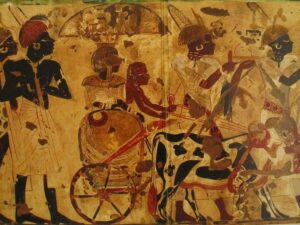
The Wheel, so dear to the European yardsticks
The modern world was created by Western civilizations with Western culture as its base. However, the components of modernity were built by multicultural contributions to this Western cultural paradigm, with many contributions from the Muslim world, Asia, Africa, and the Ancient Greeks. The aesthetic of modernity was primarily European, and globalization was initially a European enterprise driven by European agency at the expense of everyone else— that is no longer the case. European languages and broader European traditions that everyone else was introduced to via the European Industrial Revolution. This gave Europe a massive advantage, which it used to dominate the world, spreading its Western culture. Since then, many Eastern nations have grappled with Western-driven modernity to impose their own modernity on the world,d becoming today the technological centers supplying even the creators of modernity in the West. But the African engagement with modernity has not led to the same economic transformations as Asia. Why is Africa only a client and not a global producer? What does it take for Africans to fit into this world? 1
And while complaining about the modern world, all of us use its metrics to define success.
“The worst form of inequality is to try to make unequal things equal.”
― Aristotle

Vodon Ceremony
If we find that in African Indigenous pedagogy a lower inclination to critical thinking and innovation, what would be the consequences for such a culture when it was brutally, and it was brutal, between a culture that pursues knowledge and science vs. a culture steeped in mythology, nostalgia, and complacency? 2If, for example, African culture fails to create cohesion over its diversity, what would this mean for projects where broad support is necessary? If Africa has no intrinsic value for documented history, then it only opens itself to being written about.
Not only did Nkrumah have to transform the physical situation after colonialism, he also had to transform the minds of the people to something more forward-looking.— Kimani Nehusi 3
We must be free to add a value judgment when we are discussing development. Because no one on Earth will argue against formal schooling introduced by Europeans to Africa or the hospital system. So already we agree that Europeans had cultural advantages. They most certainly brought all kinds of social diseases that African cultures were superior at coping with 4. We could also argue that the traditional council worked way better than the Western judicial system with regard to family matters. But none of these things were developed to be offered as alternatives in most of Africa. If social cohesion, Asabiyyah, according to Ibn Khaldun, is culturally not strong it would explain how we could easily be divided, due to our fragmented tribal identity, and why things such as support for our own innovations and business would fail. This also explains why we can produce exceptional individuals within White society, but rarely exceptional groups— it all goes back to culture. Either our African culture(s) or the culture as a reaction to slavery and colonialism, or the cultures artificially cultivated to make our communities fail, like Black culture. While some use culture as a lazy strategy (See Thomas Sowell))it is no longer enough to say “culture” without a critical study of the mechanisms of pan-African cultures that lend themselves to these issues. There is a reason Africans are so behind, and it is clearly not one single thing; that said, I seriously doubt it is genetic or hardwired inferiority.
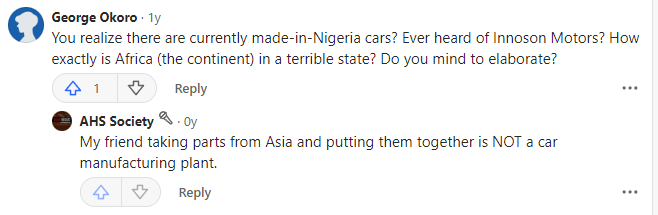
The denial mindset
Until the lion learns how to write, the story of the hunt will always glorify the hunter— African Proveb 5
 It is challenging to study Africa and see a lot of myths that we are uncomfortable with confirmed. But here is the problem: Africa and Africans are the poorest people on Earth, considering our demographic size. Something caused that. We cannot explain it all away with slavery, Apartheid, and colonialism. Not all of it. They did create a Sub-Saharan Africa whose only utility is for their purpose of alienating Africa from civilization and development. It helps them more accurately make racist allegations against Africa. This is why we don’t use terms like Sub-Saharan Africa or black Africa because their nia is malicious. There are barriers to how we think about Africa, more than geographical barriers.
How they write about Africa is if they need an example of failure, you look for the parts of Africa that failed, ignoring the ones that did not fail. So Africa is naturally full of failures. Again, the problem with being a lawyer for the defense of Africa is the harsh, bitter reality that Africa is a disaster. There is a culture in Africa that got our Motherland into this situation, and that culture continues to stymie our development. And there is no running away from this. Not only was most of Africa illiterate, but we still remain illiterate in the sense that we do not read and study. 6 So it does not matter if we can physically read; we still have the same cultural aversion to reading and acquiring knowledge. The same aversion to innovation, and do for self. Despite having no “industries” in antiquity, for obvious reasons, we still continue with the cultural mindset of non-support, ensuring we have no industrial future at any level. We work for others, building the wealth of Europe, Arabia, and Asia, and then consume their material culture. The person consuming it with glee, and the person cursing it with scorn, both are part of the Western material world, both are indebted to it. Yet on their iPad, using MTN, they have the audacity to curse capitalism in favor of something African that has never been invented.
CULTURE AND HERITAGE:
Before we go any further, many confuse culture with heritage.
Heritage is a Celebration of the Past: It is static, aesthetic, and deliberate. It consists of the artifacts, dances, folklore, and historical memories that a group chooses to preserve and put on display to maintain a sense of pride and identity. Culture is the Negotiation of the Present: It is dynamic, messy, and often subconscious. It is the real-world strategy a group uses to get through the day.
Because when we showcase the bad, people say “that is not culture”, then what is it? We did not choose that to represent us. No, what you chose to represent you is your cultural heritage; your culture is all the stuff you do untethered to human biology that is routinized and communicated across a definable demographic.
CARGO CULTURE
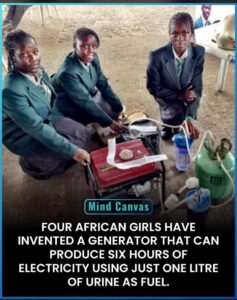
Cargo culture perfectly describes the social media phenomenon of African inventors. In this context, it manifests as technological performance—the mimicking of the aesthetics of innovation without any of the functional substance
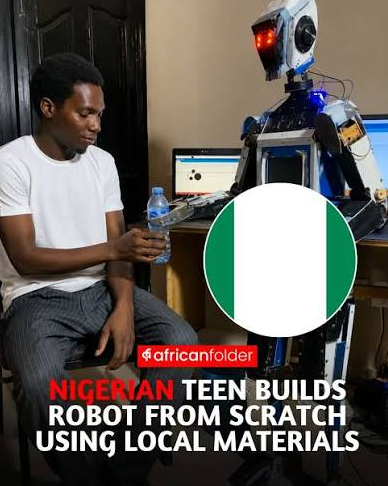
I can see the Honda sticker; can you?
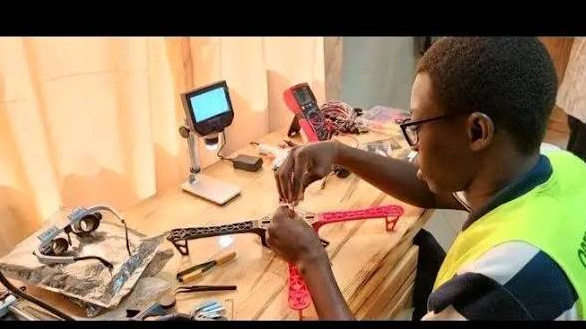
Supposed to be Captain Ibrahim’s Native Drone factory but it is sold as a kit on AliExpress
The Mimicry Approach: Treating development like a fashion trend. It assumes that if you wear the suit, buy the software, build the glass skyscraper, and copy the legal text, you will automatically inherit the wealth and stability
WHAT DOES AFRICA OFFER?
There is no knowledge from Africa needed to build a bridge, fly a plane, code this PHP WordPress page, build a wall, or make a car. So very little of modernity is contingent on anything Africa has to offer the world. That does not mean Africans were not masters of domestication and metallurgy; it just means that knowledge has been surpassed by a European and Asian package in most instances.

So, just name 10 jobs that are contingent upon a skillset unique to Africa or that Africans have an advantage in doing? The problem with us is that we have invested all of our energy in being offended.
CULTURAL PROBLEM
Abubakar, a Nigerian businessman, goes to see his old university buddy Lao Wang, now living in Beijing. He arrives at Lao Wang’s apartment and notices a brand new Audi A6 parked outside, a Hermes belt gracing his belly and a brand new Rolex on his wrist.
“My friend,” says Abubakar, “You have done well for yourself!”
“Well,” says Lao Wang proudly, bringing him to the big bay window in his apartment, “Do you see that bridge over there?”
“Yes I do! It’s a beautiful bridge.”
“That’s my project!” Lao Wang grins, pointing a thumb at his chest.
Abubakar is impressed and leaves Beijing with many thoughts on how to get rich. Years later, Lao Wang finds himself in Lagos and hits up his old friend Abubakar, who invites him to his home.
Lao Wang is almost bowled over by the opulence of the place. It is a mansion made of marble and gold. Two Rolls Royce are parked outside. He enters Abubakar’s massive office and immediately blurts out:
“My friend, you have done VERY well for yourself!”
“Well,” says Abubakar proudly, bringing him to a big bay window, “Do you see that bridge over there?”
Lao Wang looks and looks, but turns to Abubakar, confused. “What bridge?” “That’s my project!” grins Abubakar.78
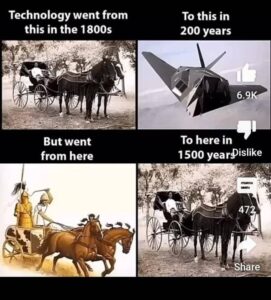 Fitting into Western civilization is where this story continues. because there are only so many ways you can do it. One is not to fit in and sit on the outside of modernity and be conquered. The next one is full integration, and the other one is to claim modernity and replace the Western cultural foundation with your own. But historically much of Africa failed to develop after the Medieval period, where at the time both Europe and Asia were comparatively similar to urban centers in Africa. What underpinned this underdevelopment was African culture. There is no way around this. As many Europeans have pointed out Africans, were isolated, but even when knowledge of the wheel was introduced, most of Africa failed to utilize it, preferring old systems of transport. 9 One of the most important differences in technology between Africa south of the Sahara during the pre-colonial period and many other areas of the world, it is frequently suggested, was the almost complete absence in the former of any form of wheeled transport. Transporting goods overland in pre-colonial sub-Saharan Africa was normally done by pack animals, where these were available, or more generally by human porterage. This lack of wheeled transport, it might be argued, had crucial implications for the history of sub-Saharan Africa, since the high cost of transport by pack animals and human porterage has often been presented as one of the principal constraints upon the expansion of trade, and hence of economic growth generally, in pre-colonial times.
To better understand this article, please watch this video on Japan and keep the African situation in the back of your head. This entire article comes into focus once you understand why Japan did not suffer the same fate as Africa as a continent and why Ethiopia escaped colonialism. Because most of the features of Japan are also true for Ethiopia. We will be coming back to this one sentence:
The Iwakura Mission (岩倉使節団) was one of many Japanese diplomatic voyages to the USA and Europe (1871 and 1873) by leading statesmen and scholars of the Meiji period. Where the Japanese discovered and learned from the West the things necessary for the modernization of Japan
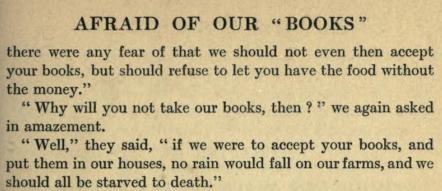
A Classic example of Cultural Reluctance 10
To protect Japan, should Japan resist Western innovations, or should it embrace them (making them Japanese) as the best means of ensuring Japanese political and cultural independence? In short, to protect Japan from Western dominance was to become more like the West. So much so that the same way Japan was forced to trade by the Americans (Perry), Japan, under the Japan–Korea Treaty of 1876 did to Korea. The isolationist policies in Asia were even harsher than in Africa. But once opened, how Asia engaged with modernity was radically different culturally.
Like everyone else, Africa was also fearful of losing their culture, and opted to stay backward (socially and technologically), and that only meant Africans ultimately lost their agency and still ended up having not only modernity imposed on them but the Western cultural framework that came with modernity.
Africans lost agency and ended up with Europeanized religions, but still dependent on European technology.
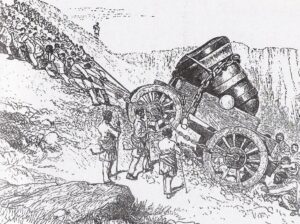
Tewodros and a Wheel
The lack of wheels in sub-Saharan Africa, it is clear, cannot have been due simply to ignorance, since many areas of the continent had been in contact with wheel-using civilizations outside Africa for several centuries before the colonial conquest at the end of the nineteenth century.)) While we are currently debating this, this is still a broader cultural problem where people are very slow to innovate and discard outmoded ways of doing things. 11It must be added that this is a generalization, as Ethiopia went back to Axum in the 3rd century, and Somalia did not have this issue. 12 But until further research tells us otherwise we will treat the wheel as a yardstick with caution. However, the stagnation of antiquated cultural habits is 100% true even for those of us living in Africa today. No matter how better something is, Africans are culturally very slow to adapt. May it be online shopping, credit cards, new banking systems, or wearing condoms, there is a cultural problem in Africa. There is also a cultural problem in how Africans understand education. In general, education is not linked to a natural intellectual curiosity. Education is solely functional as a means of acquiring stuff. Pedagogy is exclusively about repeating what others do correctly, and not about a deeper understanding where natural curiosity is encouraged. 13
Many African and Western states still believe that it is appropriate to protect their indigenous methods of thinking in order to preserve their civilisations and legacies today, despite globalisation 14.

Gulf Arab dress survived, Japan’s did not.
And because of this, there is often a disconnect between indigenous education and formal education systems. This lack of integration can result in students who are not fully equipped for the job market or modern societal demands. And the lack of integration goes right back to the theme of this entire piece. The developmental difference between indigenous African technology, and mindset and the modern one. As a defense, and we see this in Africa and America as well as the UK, is an anti-intellectualism where education is perceived as white and destructive to their fragile sense of identity. This 100% ties into our argument that the gap is so much they have very little to bring across from their culture (either because they don’t know how, or the cultures are backward*). So modernity will always mean loss of culture and identity because those things cannot coexist with the modern world. 15. And how is this different from Japan’s transition from traditional Japanese clothes to Western European clothes? or Anywhere else without a strong cultural capital or comparable culture. But it did not transform the dress code of Nigeria, India, Ghana, or the Gulf Arab states.

Those with the greatest cultural capital and agency can be included within the Western framework and ultimately develop a framework of their own based on their cultural principles. Modern but with a non-Western paradigm as its foundation.
ANARCHO PRIMITIVISM

We were lied to TWICE, lied to about the seniority of a material world, with us outside of the means of production, only as consumers, and lied to about the myth of Anarcho-primitivism (aka nobility in poverty). As if being backward can make us happy. Happy, is the new metric. And this is what a lot of this article is about. We might be poor but we are happy. Are we happy outside of modernity? Where is the joy in Tanzania when a lions comes into a village and kills an 8 year old child? Where is the happy when we need 7 hours to get to a hospital to save our child from dying of something that cost $5 in America? Where is the happy when every time we are sick we need Western doctors to visit Africa and do complex medical procedures because we do not have those skills?

They invented it, we didn’t do not say “it isn’t important”
 Driven by hunger, a fox tried to reach some grapes hanging high on the vine but was unable to, although he leaped with all his strength. As he went away, the fox remarked ‘Oh, you aren’t even ripe yet! I don’t need any sour grapes.’ People who speak disparagingly of things that they cannot attain would do well to apply this story to themselves.
Rather than admit his failure to reach the grapes, the fox rationalizes that they are not really desirable. One commentator argues that the story illustrates the state of cognitive dissonance. The fox is taken as attempting to hold incompatible ideas simultaneously, desire, and its frustration. In that case, the disdain expressed by the fox at the conclusion to the fable serves as a psychological defense mechanism by reducing the dissonance through criticism. Jon Elster calls this pattern of mental behavior “adaptive preference formation”
Yet the “rasta” or some black socialist (Jared Ball for example) on YouTube talking down modernity needed a video camera and a high-speed connection to share his “rasta” message with you about “you do not need gadgets to be happy”. Cursing capitalism, but taking a salary from Temple University and living in an apartment with a Mac and a Samsung TV. But you do need them to not end up in a modern coffle gang? And we must be very careful about this resistance to modernity that is a hallmark of African culture. This stubbornness to be technologically advanced despite all the history telling us that those who fail to advance end up here
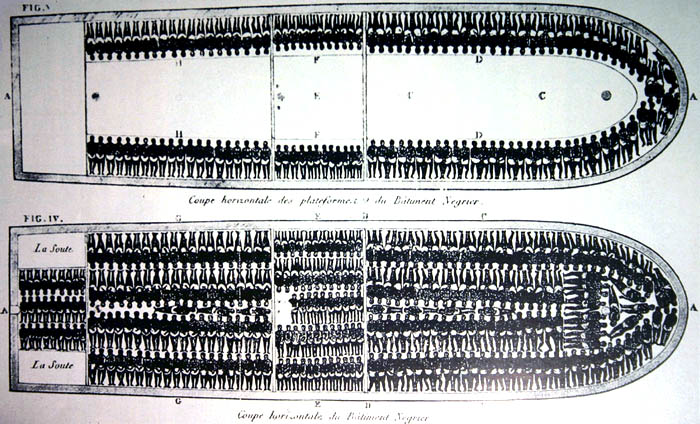
Inside Slave Ship
If we do not have the agency to balance modernity and our culture then that failure is on us.

RACE AND INTELLIGENCE
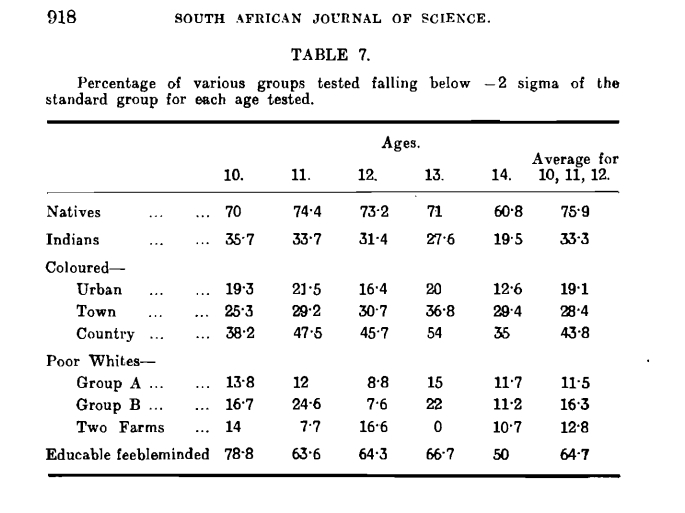
Race and intelligence have not been demonstrated, but we are working on an article discussing this topic in its own space. This section is repeated in Black Culture. When we are trashing out a topic in a critical dialectic way, we must look at all factors. Because it is probably the number one reason Whites have pointed to as why Africa is underdeveloped and why, when rich countries like South Africa are handed over to the natives, they destroy everything. And to render a verdict on South Africa, ANC has destroyed South Africa beyond a shadow of a doubt. Most will blame it on the ANC being black and therefore inferior and incapable of managing a complex country. They now have proof that apartheid was better. 16
While not the focus of this article, race-based or ethnic culture is not the only factor we need to look at. Another source of “culture” is socio-economic culture. If, for example, most people of African heritage are also from the lower class, we would see similar patterns. How do poor whites behave in South Africa and the Appalachian regions in America? What are their crime stats like? What are their broken home stats like? Having not experienced race-based discrimination, they are still out of control. If they also have low IQ scores, which are averaged out because they are classified as white, then clearly, IQ is more socio-economic than biological. 17 What about poor Whites in Australia and the UK? This proves that some of these traits under discussion are not attached to ethnicity but to social class. So, in the back of our minds, we must always ask, are some of these problems not class issues? And indeed some are, but when we see them across the class line, across the educational line, then Nairobi, we have a “racial” problem.

It is hard to trust anything from the Apartheid era but we do have some stats that shed some shocking light on the disparity between Zulus, Whites, Coloreds18 and Indians. 19
SIMPLE EXAMPLE
-

- Indians alternative
-

- Ocacia alternative

-

- Western Standard
-

- Western Standard
-

- Arab alternative
-

- Japanese attire still has a market
The sewing machine comes to Africa with all the Western technology. If we already have a strong dress culture, we take the European sewing machine and make African clothes. If we already own our markets, we plug in their modernity but with our culture. We can sell those clothes on the international market. The new technology helps our culture grow. Now, if we do not have a competitive clothing culture and wear animal skins, the sewing machine cannot help us. Our cultures cannot integrate with the new technology. So we have no choice but to adopt Western clothes 20made with the sewing machine or stay behind with clothes and indigenous technologies that have no place in the 21st century; they are not practical or competitive.
If we want to protect a culture that has not developed to the same level as what others are offering, eventually it will be destroyed by globalization. And this applies to education and everything else. We keep holding on to backward ways of doing things and losing our agency in the process. Because eventually, Western clothes win out. Eventually, Western education won out, and after 100 years of resisting it are now behind everyone else. While the Japanese would have been facing the same problem, they already had a literate society and could preserve their language and use it as a language of instruction— most of Africa could not.

Kumon school in Japan
So while the discussion of indigenous learning systems is very romantic the bread and butter question of how will indigenous education create jobs? Jobs to do what? Make computer chips? industrial farming? Make drones? While in Japan they have Kumon and uniquely Japanese ways of running business and pedagogy going back 1868, and they never stopped. Point to one single indigenous pedagogy in all of Africa that is competitive or even exists. It is theory and nothing else. It has never produced a chip or a paperclip. Beyond feelings is there an answer? And people keep us in this dream state with this woke concept of “all cultures are equal”, if they are equal why am I still writing in English? Where is the African computer software? Even Ubuntu and Django are white-owned computer technologies. And Africa will continue to stagnate because we dream more than we do. We are rewarded for oration but not for building. We are not limited, as Garvey said what others can do we can do. But who is supporting the doers? Our culture prefers talkers over builders.

Ocacia a real factory in Africa struggling to stay open
ANCIENT AFRICA WAS VERY DIVERSE
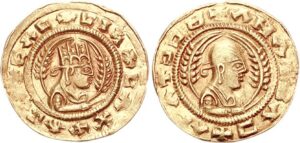
Axumite minted coins
For most of the 1st millennium AD, the Axumite Kingdom 21 had a powerful navy and trading links reaching as far as the Byzantine Empire and India. Between the 14th and 17th centuries, the Ajuran Sultanate centered in modern-day Somalia practiced hydraulic engineering and developed new systems for agriculture and taxation, which continued to be used in parts of the Horn of Africa as late as the 19th century.
On the east coast of the continent, Swahili traders linked the region to an Indian Ocean trading network, bringing imports of Chinese pottery and Indian fabrics in exchange for gold, ivory, and slaves. Swahili Kingdoms created a prosperous trade empire with the Middle East and even the Far East 22
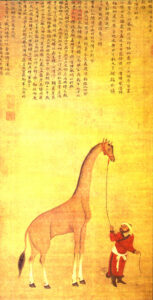
A giraffe from East Africa was sent as a gift to China in 1414 and painted by a Chinese artist at the Ming Zoo.
In the interior of Africa, trade was far more limited. Low population densities made profitable commerce difficult. The massive barrier of the Congo rainforests was more imposing than the Sahara, blocking trade through the center of the continent.
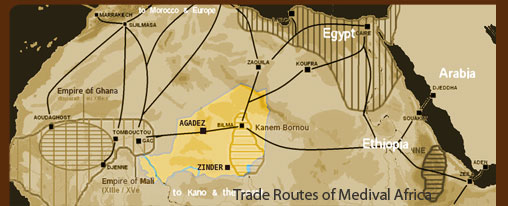
Ancient Islamic African Trade Routes
It was the arrival of the Islamic armies that transformed the economies of much of Africa. Though Islam had comparatively little impact on North Africa where large cities, literacy, and centralized states had been the norm, Muslims were far more effective at penetrating the Sahara than Christians had been. This was largely due to the camel, which had carried the Arab expansion and would soon after carry large amounts of trade across the desert.
And all of this history is necessary to make a point. When modernity arrived in Africa the relationship that Islamic West Africa, and East Africa could have was radically different from the relationship Congo and much of South isolated Africa could have with modernity.
WESTERN ECONOMIES
Mercantilism is a nationalist economic policy that is designed to maximize the exports and minimize the imports for an economy. In other words, it seeks to maximize the accumulation of resources within the country and use those resources for one-sided trade.
Within Western culture came modes of economics, industry, education, socialization, marketing, and housing, and either we adopt and adapt these things or transform them completely. Islam already had its own banking system which was capable of rivaling the Adam Smith and Keynes model. So it is no surprise it was able to adapt, being influenced by the structures of those systems in modernity, to create its own banking system. All they had to do was integrate an ATM machine, everything else was already developed at a similar stage. What in Africa do we have that can build modernity? If we were to replace Western capitalism with another system what would it be? And it would have to be tested to keep the blood of the industrial world we depend upon flowing.

How much African ownership in here?
The language then had to be Latinized as an additional step and then it had to be taken from oral to written, culturally it had no precedent of this and had to absorb everything from Western culture to modernize. But not so Chinese languages which invented the paper for their languages. There was less of a jump and therefore less of a need or expenditure to impose on modernity without the cultural baggage of European culture. So to get an oral culture to become a literate culture meant less agency compared to cultures that had 1000s of years of literature, like the Arabs. A culture that is naval is not going to need to adapt much from Europeans to match them. So what Turkey could do under Atta Turk, most in Africa could not do.
And fitting into the Western civilization is where this story continues. Because there are only so many ways you can do it. One is not to fit in and sit on the outside of modernity and be conquered. The next one if full integration, and the other one is to claim modernity and replace the Western cultural foundation with your own.
Those with the greatest cultural capital and agency can be included within the Western framework and ultimately develop a framework of their own based on their cultural principles. Modern but with a non-Western paradigm as its foundation.
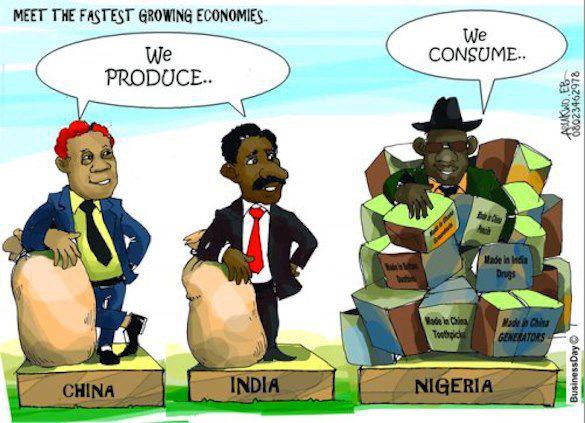 Within Western culture came modes of economics, industry, education, socialization, marketing, and housing, and either we adopt and adapt these things or transform them completely. Islam already had its own banking system which was capable of rivaling the Adam Smith and Keynes model. So it is no surprise it was able to adapt, being influenced by the structures of those systems in modernity, to create its own banking system. The same is true for Islamic philosophy which pre-dates Europe, taking inspiration from the Greeks to teach it back to Western Europe. So while Europeans had the traditions of the Enlightenment, Muslims had Ibn Sina, Ibn Rushd, Ibn Khaldun, Al-Arabia etc. Most of Africa had no similar tradition that could be integrated into modernity— but the Chinese did. Both Asia and Arabia were heavily literate societies so the modern printing press could quickly be integrated into their culture to produce a society equally as literate as Europe.
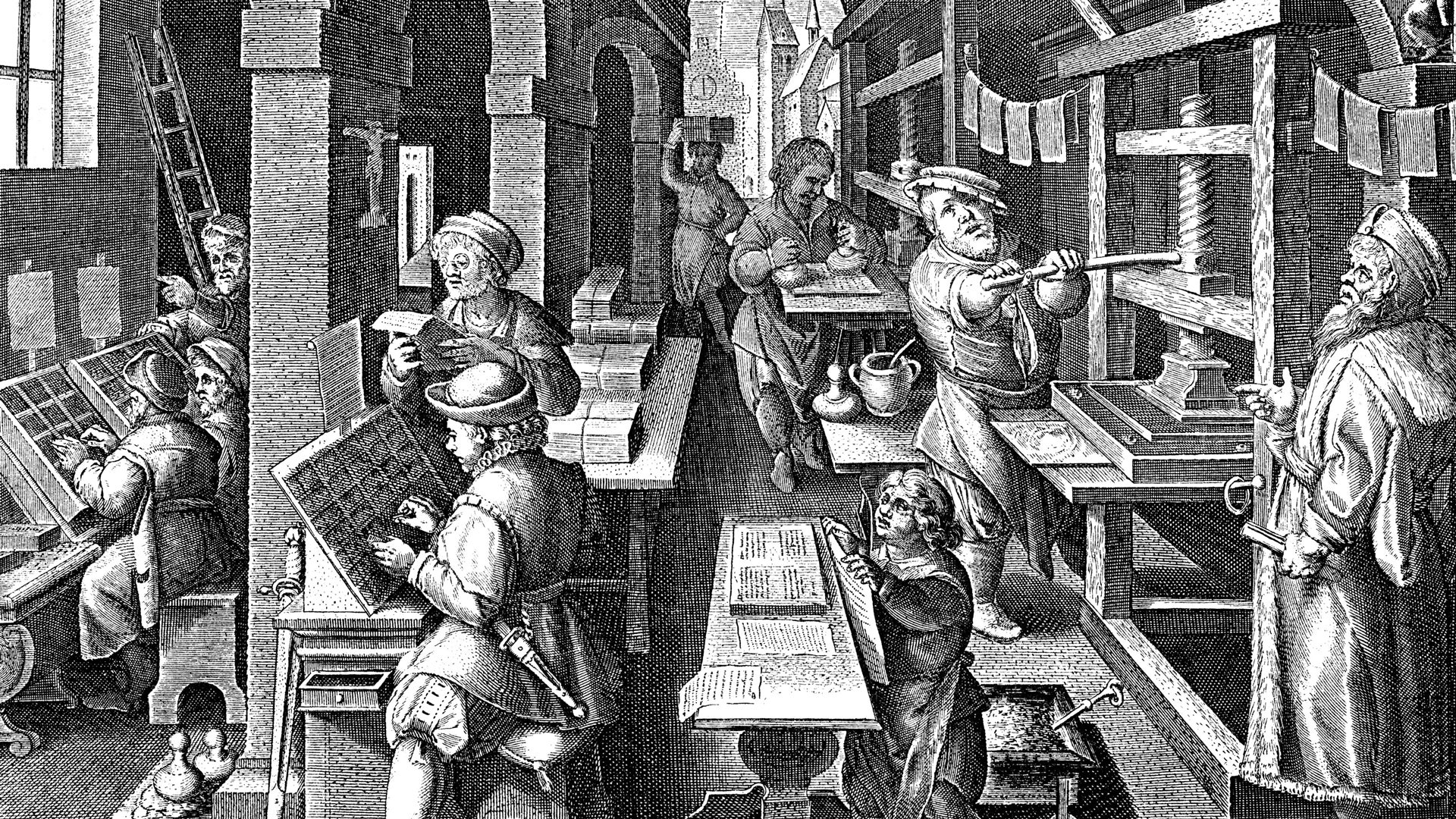
When the printing press was introduced to Japan it did not take them more than 6 months to spread books all over Japan. Not true for most of Africa which had no culture of literacy which means no indigenous traditions of this kind of knowledge until Europeans showed up. How can you compete with Japan and India? We also need to understand how literacy affects culture in terms of education systems and pedagogy. It is way deeper than it looks on the surface. The more disparate your culture is to this kind of education means you cannot use what you had to integrate into the modern world. You first have to lose what you have and never have to take up something alien. The only way that happens is cultural erosion.
Until lions learn to write, history will always be told by the hunter— African Proverb
In Africa, the language then had to be Latinized as an additional step and then it had to be taken from oral to written, culturally it had no precedent of this and had to absorb everything from Western culture to modernize. But not so Chinese languages which invented the paper for their languages. There was less of a jump and therefore less of a need or expenditure to impose on modernity without the cultural baggage of European culture. So to get an oral culture to become a literate culture meant less agency compared to cultures that had 1000s of years of literature, like the Arabs. A culture that is naval is not going to need to adapt much from Europeans to match them. So what Turkey could do under Atta Turk, most in Africa could not do. But Nkrumah did try, but his mission to transform the minds of his people was the greatest challenge one of which was Ata Turk, or Emperor Mutsuhito.
When the gun was introduced to Japan Ethiopia and parts of West Africa all three handed it over to their metalsmiths to make their own. The cultures without this tradition had no tradition to turn to to make guns and therefore had to depend. 23
So with a new understanding of culture and religion, we had to go back to our earlier work and then all kinds of flaws started to emerge. The work had to be rebuilt and then we recognized new solutions. The problem of “culture” became more obvious. And the solutions are radically different. We are right back when Europe clashed with Africa and asking are some cultural traits were compatible with modernity.
Ethiopian cuisine lends itself more to globalization than native South African dishes. Why? Why isn’t food from Angola seen all around the world? Why is Indian and Asian food so dominant? Do they have cultural advantages?
Let us look into it: Ethiopian culture places an aesthetic value on their food. Zulu culture doesn’t give a toss about presentation, food is only for survival. While in every dominant food culture— from Japan to India to Ethiopia to France they do. Who has the cultural advantage when food requires an aesthetic aspect?
But before we get to modernity, do we want to be part of this modernity because there is an impasse? Not all of our cultures are capable of creating a New modern world of smartphones, universities, satellites, chipsets, HTML, etc. Now what? There is NO WAY a culture of anti-intellectualism will invent geostationary navigation if that thing is desirable in the first place. I say it is, so now what does it say about the culture that stops us from creating it? Now we have to issue a value judgment about the written word vs oral tradition. Oral tradition, as a culture, cannot build the modern world. Oral culture cannot code HTML, so without ever getting to Africa vs something else, we know no oral culture can create the world of computers. And this is just one example.
So how do we have this discussion without a value judgment or apply the racism used to justify our oppression? Racist thoughts made it clear.
Hegel wrote that Africans are a ‘race of children that remain immersed in a state of naiveté’. He further wrote that Indigenous peoples lived in ‘a condition of savagery and unfreedom’. And in The Philosophy of Right (1821)
Did he see something to come to this conclusion? Yes. He saw his culture as going forward producing the Age of Enlightenment and he saw the non-White cultures as stagnating for eternity. Now he attributes this to their innate nature, a victim of their biology. Like all these racists they are racists not only for their statements but their belief that change is impossible for some groups. But Europeans were in a state of stagnation also. The sensitive question is still with us. If modernity is valuable, are our cultures capable of assisting us (on their own) with modern advancements? (medicines, universities, technology, cars, bikes, etc)? Now what happens when they do not assist us? Does that make them backward? Or should we be woke and ignore the problem and just call the discourse racists?
Some political systems are better able to defend their sovereignty. Some political-religious setups are objectively better at creating vast empires

With the ethnic tribal identity, it is impossible to conquer and sustain such a vast empire. But we have to ask the question, is this desirable? I think this one goes beyond like it vs do not like it. It is how the world works. These polities ultimately conquer those who fail to form nations and caliphates. Just like the guy who invents the gun probably will eventually beat you in a war. We can take issue with nationalism, which is only 300 years old, but without it you don’t stand a chance.
So the identities that can create large caliphates or empires will win out. The Serer vs the Islamic identity means Islam wins. Serer requires an ethnoreligious membership, Islam requires only a religious membership and that means it is open to all.
The Jews today have solidified their identity and in some way shape or form have Israel as their center. Jews globally have an opinion— either way on what they want Israel to be. Jewish identity beats African identity sense most of us do not have any centralized values. So how can we use identity to create a block to serve our interests? Where in our diverse culture can we find common ground? We cannot.
Video example of Egyptian cultural Agency
There are cultures in Africa that have never promoted scholarship or critical thinking, how can they compete? The only way Native South Africans are competitive is by some degree of cultural abandonment and being absorbed into Western culture. There is no path to modernity without doing so. You cannot go to Zululand to learn how to fly a plane— You need English and Western institutions. In short, that means, unfortunately, that your culture on its own cannot assist you in modernity. Because everything that represents you culturally (language, etc) is at natural odds with your goals in modernity. And I am making it very simple to illustrate a point. Adapting means modifying or neutralizing our culture.
The culture of non-support which is a culture, means we cannot do what Arabs or Jews can do. At the Palestinian rally what you never thought of is who is making those Palestinian flags, who is printing the banners, and who owns Gaza Cola? There is resistance, ours is not. Because we lack a culture of supporting our own businesses and creating our own media. 
Again this is a simplification to illustrate the role of culture in development.

We had a strong culture of church-going which was used to organize us economically and politically around certain causes. But that is useless today. Or was made useless?
What within our cultures can we bring forth to help our development? That is how I am looking at this question. What in our cultures is stopping us from development? What cultural attitudes and behaviors stop us from creating the modern technological world?
CULTURAL CAPITAL
Pierre Bourdieu defines cultural capital narrowly as:
fluency in a society’s elite culture. Fluency in low-or middle-status culture does not represent cultural capital because these cultural fluencies do not transmute into elite status; they transmute into middle or low status. Bourdieu was interested in how elites reproduced themselves from one generation to the next. High-status culture emphasizes classical art, music, dance, and literature, but it also includes furniture, architecture, cuisine, vacation resorts, and clothing. Knowledge of these arts represents capital because and to the extent that this knowledge can be turned to the owner’s financial and social advantage at multiple points in the owner’s life span. For example, when Josephine Smith wears the right suit, handbag, and shoes to a job interview on Wall Street, she makes a favorable impression and lands the job. Josephine’s mother and peers taught her how to dress, a culturally monitored skill that paid off when Josephine landed a lucrative job. When Josephine subsequently marries a millionaire and obtains a share of his fortune, her cultural capital has produced additional financial capital.
Now, compare the cultural capital of all of Africa to that of all countries like America or Europe.
EUROPE’s SUCCESS
Let us look at why Europe after such a long period rose in the 17th century to become a world power. The Goldilocks Factor. Not too much, not too little, but just right and at the right time in history. Let us be blunt, a lot of it was also luck. If it was IQ, they would have done it 10,000 years ago all on their own. 24
- Isolation. Just isolated enough to be somewhat protected, not so isolated as to be stagnant.
- Trauma. Invaded enough to create challenge but not so much as to have the culture exterminated.
- Decentralization. Just enough to keep anyone from gaining a total lock, not so much as to degenerate into complete chaos.
This article would turn into a book if we explored this topic. But suffice to say, no one fully understands but it certainly was nothing to do with White being superior.
WHY IS AFRICA POOR
This is the question that attracts comments far and wide, from the qualified and the unqualified alike. From people who never seen Africa to people who know nothing about economics.

Poverty sometimes is a choice out of ignorance or knowledge. The majority of Africans are caught between traditionalism, and primitive 25 ancient living, and modern, individualist, liberal life. Traditional or primitive life is easy coz there is no incentive to compete at the level of international standards. Food, water, and shelter are easily available regardless of quality and quantity. We have many Africans comfortable with their traditional way of life since it has less pressures/ requirements. As long as you find food, the rest is not important.
Beneath the surface of Africa lies a wealth of mineral resources of enormous value. In 2019, the continent produced almost 1 billion tonnes of minerals worth $406bn. According to the United Nations, Africa is home to about 30 percent of the world’s mineral reserves, 12 percent of the world’s oil, and 8 percent of the world’s natural gas reserves. But how much of these resources can Africans in their original technological state access? What good is sitting on a bank vault if you do not know the combination?
Popular opinions come in the following format. Blame the external colonial powers or exclusively blame it on low IQ, culture, and corruption:
CORRUPTION, Favored by Whites and many Africans goes like this: Corruption: I have found corruption to be a recurring theme in most dirt-poor African countries. The political elites are vile and dirty. We can’t blame colonialism for everything. My own great-great-grandfather had slaves that he sold to white men in exchange for liquor. Some African countries are richer than others. Why is this so? Do you know that a Nigerian senator earns more than the president of the United States of America?26

African corruption predates European colonialism. It is an aspect of some African cultures long before Europeans arrived but Europeans exacerbated this problem.
She goes on to state:
Bill Gates (our comment: please do not trust Gates on African development)recently revealed that he has spent over $1 billion on Northern Nigeria alone (ONLY Northern Nigeria) and it went to waste. No results at all. This is a region where people are still getting Polio. This area is also ravaged by Boko Haram. Children are not even going to school. Maternal and infant mortality in this region is disturbingly high. People who are responsible for distributing relief materials are selling them cheaply in the markets. Gates was recently in Nigeria for his friend’s daughter’s wedding when he made the revelation about the $1 billion he invested in northern Nigeria. Father of the bride is the richest man in Africa, Aliko Dangote 27
- Some of our resources and artifacts were looted by the British but we have ignored the amount of history destroyed during tribal wars and sold by greedy chiefs.
- Superstitions, limiting beliefs, and a general lack of intellectual curiosity. There are a couple of ridiculous stereotypes that are holding us back. One simple example I can recall is this:

African culture with modernity.
General lack of intellectual curiosity: By this, I’m referring to a lack of open-mindedness, zeal to learn and overreliance on old beliefs and conspiracy theories. There are babies dying from old traditional medical practices and parents who refuse to get their children immunized because their chiefs told them the white men will kill their children. The result of this is that a lot of money is diverted to manage these illnesses and that is how the circle of poverty continues. People are simply not willing to be open-minded and intellectually curious. Hence, you will find a lot of Ponzi Schemes thriving in African countries because of this lack of intellectual curiosity and laziness where study and hard work are means to economic development. This is a huge minus for an economy that should be finding innovative ways to build wealth.
Where are you going with this behavior and this culture in 2025? Who behaves like this? Have you seen Arab culture like this or Ethiopian culture or Gambian culture? So we need to drop the PC and start speaking without fear of offending certain traditions. She is shaking her bottom at the camera and this is what they call “culture”. And this video is not a one-off. Its backward, and unsophisticated.
Nothing on them they own, not even their hair

Many will add that foreign control and profit drain: Africa has all the resources you can think of but profits from the exploitation of these resources are sent back to Europe, China, and the Americas. Why? because almost all large companies in Africa are controlled and owned by foreigners. But there is a reason why foreigners can control Africa. Without foreigners the continent would starve to death within 2 weeks. The people with the oldest civilizations are today the most dependent continent on Earth.
Since 1960, Africa has received billions of dollars in aid. In the last 30 years alone, one estimate puts aid to the continent at $1.2 trillion, though distributed very unevenly across the continent. In this time, African economies have developed. Life expectancy and populations have both risen dramatically, and absolute poverty has fallen. Yet the rise in living standards has been relatively meager, and few African countries have achieved the rapid economic growth seen in much of Asia – in South Korea, China, Vietnam, Indonesia, India, or Bangladesh – in the same period. 28
CULTURE OF AID
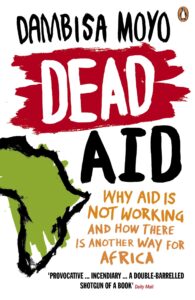 Aid is not merely one source of financing among others. It serves to make the extraction of wealth from Africa possible. Today’s neoliberal era is characterized by the commodification of nature, the privatization of public goods and services, the liberalization of markets, and the licensing of looting and environmental destruction by transnational corporations. Aid uses public funds to subsidize and encourage the implementation of neoliberal policies that have resulted in the growing impoverishment of the majority, and the obscene accumulation of wealth by national elites who are among its main beneficiaries.
When Rwandan economic students write a paper on development their favorite word is encourage investment. That is a cultural mindset where development must be external. There are “business people in South Africa waiting on grants to start businesses. Until then they will use their time upvoting nonsense on social media.
CONCLUSION

Ingredients for a cake
What we are looking for is good synthesis. By looking at all the relevant opinions we find a statement that reflects reality. And we do this knowing this complex problem does have an answer. Africa is not poor by happenstance. Most of us know the work of Walter Rodney and Eric Williams as a balance. Clearly, the only question is how much of our current poverty (by all metrics) is self-inflicted (to make it simple) or created by external forces eying the continent with contempt. It clearly is not one and not the other but a mixture of both. One thing is for sure the solution is going to have to be local. (meaning with us the Africans). Because if we fail to get education and support our own nascent industries then Nairobi we have an eternal problem and Garvey was explicit about this problem. Yet as I am typing we have fewer African-owned businesses closing down compared to if I was writing this 20 years ago. So our myopic cultural outlook means that every white man can leave the keys to all their civilization and follow Elon to Mars and we will still be here in every form of fiscal and mental poverty.
Tell no lies, Claim no easy victories, mask no challenge — Cabral
And we must come to terms with this. Our indigenous cultures, on their own, could not/never build the modern world we see today even if given 20,000 years to do so. 29 This is the red pill. For 1000s of years Europe, and Asia, also did not have the right stuff. Japan until the 18th century did not have the right stuff and own their own could not build Sony. Europe, through luck and other forces, was able to come up with modernity and build it on their cultural framework. We Africans will need to integrate and then innovate if we are to have a new African future.

There are no kings to save us
FOOTNOTES
- This article is a synthesis of previous works, and assumes the reader understands the points without us having to burden ourselves by explaining agency and other topics. We are also assuming the reader appreciates why words like “backward” are being used for brevity and succinctness. it becomes impossible to discuss a topic properly when burdened with disclaimers for feelings and worried about accusations of being non-woke[↩]
- Today, Africans will take their money and squander it on “religion” to get things and get things done to others; this kind of mindset could never produce the modern world if left alone[↩]
- Paraphrase from Motherland[↩]
- Rites of Passage[↩]
- yet they say we have no philosophy[↩]
- So this article on an African-owned platform will probably be read by 2 people, yet a White channel having this same conversation to a white audience gets 43K views. [↩]
- This is a version of a story I witnessed in Tanzania in 1999, a friend of mines dad was minster of Infrastructure and showed us an example of this. I could tell you 100 stories like this in South Africa[↩]
- For all the corruption in Israel, things still get built, the corruption might be who got the contract (friend of Bibi) but the projects do get built, in Africa the eat all the money[↩]
- Law R. Wheeled transport in pre-colonial West Africa. Africa. 1980;50(3):249-262. doi:10.2307/1159117[↩]
- among the Cannibals[↩]
- Ocacia also notes this in their factory experiences in Africa[↩]
- The 6th-century Byzantine historian John Malalas recorded that an ambassador sent by Emperor Justinian to Aksum saw King Kaleb riding a carriage drawn by four elephants[↩]
- This discussion is very broad and extensive[↩]
- Ezeanya-Esiobu, 2019; Gupta, 2015; Funteh, 2015[↩]
- Which is not always the case, but if Africans lack agency and innovation then obviously their traditional cultures will be destroyed before they can adapt[↩]
- It is very easy to make this conclusion, but is it true? Let us hope not[↩]
- They are just as White as another person, so if their IQ is low then slavery and race are not contributing factors—only economic status is[↩]
- See article[↩]
- Intelligence test results of poor white, native (Zulu), by ML Fick · 1929 · Cited by 68[↩]
- No one is going to the UN in animal hides, as an extreme example[↩]
- in Ethiopia and Eritrea[↩]
- See photo of Ming Zoo giraffe[↩]
- The Journal of African History Vol. 12, No. 2 (1971), pp. 173-184 (12 pages) Published By: Cambridge University Press[↩]
- How Islam contributed to Western civilization[↩]
- We must not shy away from these terms in any critical study, there is no other word for some of the practise that go on in Africa under the banner of culture. They do nothing for our ethical development[↩]
- Anazuo Salihu on Quora, works in economics[↩]
- In April 2024, Dangote was the wealthiest person in Africa, with an estimated net worth of US$13.9[↩]
- Expensive Poverty,
Greg Mills[↩] - Basil Davidson mentioned this, remember we Africans were here for 200,000 years and we did not invent much[↩]