

Why Kwanzaa 365 | The Pan-African Diaspora Holiday
We must carve out of the hard rock of reality the place we want to stand on and leave as a legacy for those who come after us–Maulana Karenga
As an African American and Pan-African holiday celebrated by millions throughout the world African community, Kwanzaa brings a cultural message that speaks to the best of what it means to be African and human in the fullest sense. Given the profound significance Kwanzaa has for African Americans and indeed, the world African community.
Kwanzaa is a cultural holiday, celebrated from December 26 to January 1, which is profound
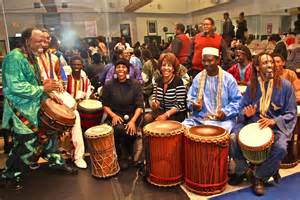
Kwanzaa Drumming
and because it reclaims what was lost during the African Holocaust—that sense of an African connection. It replies to the ongoing mental slavery experienced from the Diaspora being culturally orphaned in the West.
Kwanzaa is an authentic African Holiday created in the African Diaspora. It is becoming part of the traditional African American and African diaspora cultural heritage. All holidays have their roots somewhere, and Kwanzaa is an indigenous African American creation, which is no more or less authentic than Christmas (which is a “made-up” holiday of pagan origins) [1], most modern Jewish rites, or Islamic Eid, or Islamic Mawlid. But like Ramadan, Kwanzaa is not just for a few days, it is a focus time to train ourselves in Pan-Africanism. When Ramadan ends, every Muslim knows to take those things learnt into the rest of their lives. Kwanzaa is 365 days of the year.
NGUZO SABA
Shop African
- Umoja (Unity): To strive for and to maintain unity in the family, community, nation, and race.
- Kujichagulia (Self-Determination): To define ourselves, name ourselves, create for ourselves, and speak for ourselves stand up.
- Ujima (Collective Work and Responsibility): To build and maintain our community together and make our brothers’ and sisters’ problems our problems, and to solve them together.
- Ujamaa (Cooperative Economics): To build and maintain our own stores, shops, and other businesses and to profit from them together.
- Nia (Purpose): To make our collective vocation the building and developing of our community in order to restore our people to their traditional greatness.
- Kuumba (Creativity): To do always as much as we can, in the way we can, in order to leave our community more beautiful and beneficial than we inherited it.
- Imani (Faith): To believe with all our heart in our people, our parents, our teachers, our leaders, and the righteousness and victory of our struggle.
Did you know: Swazis call the first harvest Incwala. Zulus call it Ukweshwama. An annual day to celebrate the harvest and King’s fitness to rule.
DEFENDING KWANZAA
Some have taken Kwanzaa from a cultural revolution to a shallow cook out, an opportunity to party divorced from its economics and Pan-African roots.
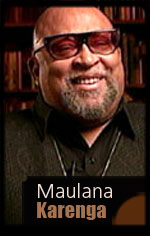
Maulana Karenga
Of all the criticism detractors launch at Kwanzaa, it is amazing none of them have a leg to stand on. Most critique is Ad Hominem (against Karenga). But Karenga is not Kwanzaa, when Karenga is dead and gone, the virtues of Kwanzaa will not depend on his personality. The term “Created” is used to detract from its authenticity. But every culture creates, Kwanzaa is just a modern creation. Holidays are created in Africa all the time, like “Africa day”, and “Reconciliation Day” for all kinds of questionable unproductive reasons. [perfectpullquote align=”left” cite=”” link=”” color=”” class=”” size=””]Kwanzaa is an Authentic African Holiday because it was created with an Authentic African spirit[/perfectpullquote]
Swahili | Some try to get technical, and say Kwanzaa is not from West Africa, and is a mismatch of bits and pieces and therefore inauthentic. But any serious reader of African culture, especially African Diaspora culture, would know that the involuntary Diaspora is a quilt of African values, of Pan-African values, and Pan-African culture. The Diaspora use their African memory to create and find identity in the spirit of an Africa lost during enslavement. (And African culture did reach America from the Swahili Coast of Mozambique). Pan-Africanism is a composite of a diverse array of African rituals and values, taken from a cross-section of Africa.
Many African Americans, not knowing their actual ethnicity, will take garbs from Nigeria and names from North Africa and the Swahili Coast: Thank the African Holocaust for them not knowing their actual homeland. And we could go deeper, when we understand Africa from a Pan-African lens. So Karenga is 100% authentic to use his African Diaspora creativity to create a new Pan-African Diaspora experience, by taking what is relevant– the Pan-African Swahili languages and parts from the diverse continent, which produced the diverse Diaspora. It is beautiful and genius to compile these sacred things to repair, what must be repaired with dignity and an African reconnection.
Made Up
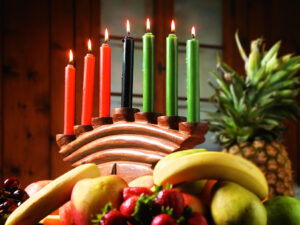
First Fruits: Kwanzaa
It is a very strange argument, because what isn’t “made up” are there naturally occurring Holidays that seamlessly appear in history? But what is unchristian and hypocritical, is when European Christians, who created the African Holocaust, vociferously attack Kwanzaa as “making it up,” or being “fraudulent.” Worried about losing their enslaved flocks? It is like the pot calling the kettle black, considering the obvious history of Christmas (as well as the commercial exploitation by big businesses) and all the other made up.
Eurocentric inventions and dubious content, which is treated as mainstream. [1] And neither do Easter Bunnies and Santa Claus, but yet they are tied to Christianity. And people can do as they may, but then listen to their own Bible and deal with the plank in their own eye first.
Nia (Purpose)
Karenga’s most outstanding contribution to the forward flow of humanity is to give the African Diaspora their “own” holiday. Considering the legacy of slavery and the destruction of the African connection it is beyond critique. It is clear that the ongoing Holocaust against African people is a mask in the voice of the detractors, as they continue to try to make African people globally divided and culturally orphaned. Kwanzaa ultimately, like the message of Jesus and Muhammad, is there to heal. In the case of Kwanzaa, the target is the disenfranchised African Diaspora. Beyond nitpicking at minutia issues like “Why Swahili?” the entire message is redemptive and constructed on rebuilding African people’s humanity.
Who is Kwanzaa for?
Buy Now, should people in Africa also celebrate Kwanzaa? Maybe as a sign of unity with the Diaspora, but it would be a little odd for all of Ethiopia (as a good example) to adopt Kwanzaa. At the roots of Kwanzaa is the need for the Diaspora to reconnect with something stolen/missing. Nothing is missing in parts of Africa with deep cultural and historical connections. Now the Caribbean, South America and the UK, 100% so. And maybe the AU should celebrate it symbolically to strengthen ties with the Diaspora.
THE DECLINE OF KWANZAA
From the day Kwanzaa was created, our enemies have been seeking its utter destruction. As someone who edited the Wikipedia Kwanzaa page, we had to lock it because of attacks some years ago. Why do you think people, including Negroes, want to destroy Kwanzaa? What is so wrong about our reconnection with objectively healthy values? What is wrong with the family? What is wrong with education? What is wrong with culture? Remember what the number one complaint about African Americans is. The lack of family structure and education. The crime stats, yet look how they react when we try to solve these ailments.
Kwanzaa is not what it used to be, but so are sales of African-centered products and services, along with readership. What we are seeing is a rise of ghetto culture where figures like Nicki Minaj and Jasmine Crockett are becoming the norm as representatives of our group. Where identification over the last century has gone from Negro- Colored- Black- African American and now back proudly to black (lowercase this time). There is nothing on Earth Whites hate more than African agency. How bold was Karenga all back then to suggest African values for the African Diaspora? It was almost too good to be true. My bitterness stems from how we have been our greatest oppressors, discarding everything great we have accomplished, from Jazz, to the progress made in the 60s, to the disrespect for our historians, and now the neglect of Kwanzaa. And that includes those who celebrate the veneer of Kwanzaa removed from its core Nguzo Saba.
Yesterday, I said Kwanzaa was in decline. Why did I say that? Because it is A. It is true, B. I would like you to get off your arse and defend it! Someone thought we were attacking them. While they took Kwanzaa as an opportunity for entertainment (while wearing a Chinese Dashiki) not realizing they are part of its decline. Kwanzaa goes BEYOND the celebratory fete, it is an ideology dont be that donkey with holy books dancing in a Chinese Dashiki to your doom. I read a few articles on Kwanzaa, and all the focus is on the superficiality of the celebration. What color candles to burn, the ritual. Nothing of the substance. No wonder African businesses no longer look forward to Kwanzaa. The articles used the word ‘black people” when clearly self-determination demands we identify as Africans. This is also part of the destruction of Kwanzaa when it becomes empty of its deeper Nia.

With the decline of conscious African content, we see a careful repositioning of films like Sinners as convenient replacements. It ticks all the boxes, and none have any further thirst for a deeper exploration of African issues. And this is despite positive aspects of Black Panthers and Sinners in making the African connection, the drift is less emphasis on these elements to further separate the African in African American and recreate a black American, or as some say, a black slave of America with no place of origin. Why would you need Kwanzaa, which is a reminder of our African history?

In a 2019 National Retail Federation poll, 2.6 percent of people who planned to celebrate a winter holiday said they would celebrate Kwanzaa. Roughly 14% of the United States population is African American. According to Keith Mayes, author of “Kwanzaa: Black Power and the Making of the African-American Holiday Tradition,” said participation has leveled off. Based on his research, he estimates a half-million to 2 million people in the U.S. celebrate Kwanzaa, out of about 40 million of Kwanzaa’s target audience. The motives, according to sources, vary, but we pin it on the loss of African identity and the deliberate rise of a black identity by the very people who never wanted Kwanzaa to thrive.
Yet as Barbados pushes deeper into its African connection, we see a deeper call for things African. These things cannot be separated. The question of culture can only be answered by looking to the mother culture. The question of Pan-Africanism creates an African identity. The naming yourself African American implies a relationship with the continent of Africa! Black American is signaling a disconnection.

Ocacia, who make African clothes and is owned by the creators of 500 Years Later and Motherland, said that during the first release of Black Panther, they had so much sales, that if it continued, they could open stores in New York. That quickly proved to be a fad, not repeated by the time Wakanda hit cinemas. Ocacia also notes a total decline of sales in Kwanzaa and especially Black History Month. MK Asante, Jr commenting on the sales of the Black Candel, said “bro– there are no sales, they dont buy, it is not even seasonal anymore.
Our potential is there for Pan-African economic transformation, but the choice is again Non-support. Supporting each other is like painful or something. And the justifications not to support are equally alarming. “too expensive” or the flipside “the quality is not good”. Or my favorite, “Are they black? While wearing White American capitalism made in China.

Yet you could be fooled and think this post is overly pessimistic. Why, because you saw many people with the Ibrahim Traore meme and photos of Malcolm X for their status updates.

The cognitive dissonance is because they are actually rooted in the patina of consciousness, not any structured Pan-African conscious ideology. They have no principled position on anything other than what sounds best in any given moment.

The same guy who just praised Traroe for kicking out the French celebrates the random bombing of Nigeria by America. The same person who quoted Malcolm X on not believing the lying media just swallowed Fox News on Trump saving Christians from Muslims.
But the very person in denial about the decline of Kwanzaa is not the purpose of purchasing anything during the 4th day. They probably have two old Chinese Dashikis and some Chinese candles but do not comprehend how we arrive at “Kwanzaa is declining. ” We can measure hits to our site and Kwanzaa themes; we have access to sales from Kwanzaa art and films. Starting with the film “The Black Candle.”

A RETURN TO KWANZAA

IDEOLOGICAL FATHER
[See African Leadership]
If ever there was a living African-American philosopher on par with all those in antiquity it would be Dr. Maulana Karenga. Such an influential figure in Africanizing the descendants of the enslaved Diaspora he is can be considered an icon. And all great men are controversial and do questionable things, but that does not diminish their contributions to, as he would put it, “the forward flow of human civilization.”
In the African-American struggle, the legacy of Malcolm X was realized by moving what was a “black struggle” to an African-American struggle and with this a connection to the Pan-African world.
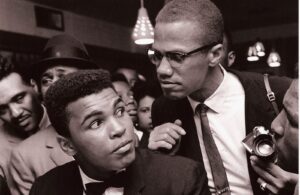
Malcolm X and Ali
Malcolm continued the legacy of Garvey when he made the profound declaration of crimes against humanity. But since Malcolm, most have been concerned with a local revolutionary outlook; disconnected from the broader Pan-Africanism. However, for much of Karenga’s career as a public intellectual, he has carried forward the virtues of Malcolm’s mission culturally and politically. And when we reflect on the core of the conflicts with the Black Panther party and the disagreements with the late Hakim Jamal it was linked to the African cultural argument. While most were content for a better-sized crumb Karenga wanted a complete cultural paradigm change: A profound move for a person born into the harsher side of the American racist system. So no loner would we look to the ideology of Europe, but to Africa. No longer will we model our humanity on Greece, but back to Ancient Egypt.
No longer would English be our lingua franca, but Swahili. No longer would our culture be located in America, but in Africa. And on all of these issue history has vindicated Karenga while he is still with us as an elder.
Karenaga and the Black Panthers were also victims of the FBI’s COINTELPRO program. A program that was to “expose, disrupt, misdirect, or otherwise neutralize” groups that the FBI believed were “subversive – Create dissension between groups (e.g. by spreading rumors that other groups were stealing money or bad-mouthing each other). And it is sad that despite the stark lesson of history many continue to extend the success of COINTELPRO by letting ego and myopia spoil good relations and good work.
It is immature and simplistic to take the flaws of the founder and impose them on their work. This is the spectacle to distract people from the values of liberation brought by their liberators. Was Nkrumah without blemish? Was King without flaw? Was Bob Marley not abusive to his wife? Do we throw out everything because of these human failings that occurred to oppressed people in their growth stages? Africans are humans, full of contradictions that are there to also be learned from. And clearly, we have not when we look at the vulgar individualism and egos that smash unity over trivial things, not critical to the bigger hierarchies of liberation.

African Family @ Kwanzaa
We are not cultural orphans of White America, only struggling for a better share of the American pie. Our journey must, if to be meaningful, take us back to our African path and the continuation of our cultural journey in modernity. Africa is our reference and Karenga has always articulated this, reconnecting us not to 50 years ago, or to “black identity” created in a 1960’s reactionary vacuum but right back to the Nile Valley civilization. Karenga has from this solid ethical rock formulated viable solutions for Africans everywhere. We are forever indebted to his wisdom an
d his dedication to creating real ethical institutions to carry on our African culture uninterrupted.
Several things preserved us as an African people throughout the Holocaust of enslavement: The first and most important thing I think is our deep spiritual roots. Our capacity to believe in our humanity and to hold on in despite of the most dehumanising situation –Maulana Karenga

Sorry, the comment form is closed at this time.


Pingback: What Kwanzaa means for Black Americans - The Apopka Voice